


As the cryptocurrency landscape continues to evolve, innovative platforms like Lighter are capturing attention with their upcoming Token Generation Event (TGE) for the $LIT token. Scheduled to occur before December 31, 2025, this event marks a significant milestone for Lighter, a decentralized exchange (DEX) that has already amassed a total value locked (TVL) of $1.44 billion and an open interest (OI) of $1.7 billion as of late 2025. With a 24-hour trading volume reaching $5.41 billion and monthly revenues around $13.8 million, Lighter positions itself as a robust trading infrastructure rather than just another perpetual contracts exchange. This article explores what the Lighter decentralized exchange is, the essentials of Lighter’s TGE, details of the $LIT airdrop which allocates 25% of the total 1 billion token supply or 250 million tokens directly to eligible users with no vesting or claim requirements, and strategies to maximize rewards through Season 2 points farming.
What is Lighter DEX?
Source: Lighter
Lighter is a decentralized trading platform built on Ethereum's Layer 2 solutions, focusing on providing efficient, low-cost perpetual contracts and spot trading for cryptocurrencies and real-world assets (RWAs). Launched in its public mainnet phase, Lighter has quickly grown to handle over $248.3 billion in 30-day trading volume and $167.9 million in annual revenue, distinguishing itself through zero-fee spot markets for assets like ETH and a zk-powered order book for enhanced security and speed. Unlike traditional DEXs, Lighter emphasizes institutional-grade reliability, with a liquidity pool (LLP) TVL of $698 million supporting stable executions. Its positioning as a bridge between fintech, brokerages, and retail traders sets it apart, aiming to rival centralized exchanges (CEXs) with features like mobile apps and zkEVM sidecars planned for H1 2026. This infrastructure has attracted over 11.7 million points distributed in its rewards program, signaling strong user engagement.
Source: Lighter Exchange
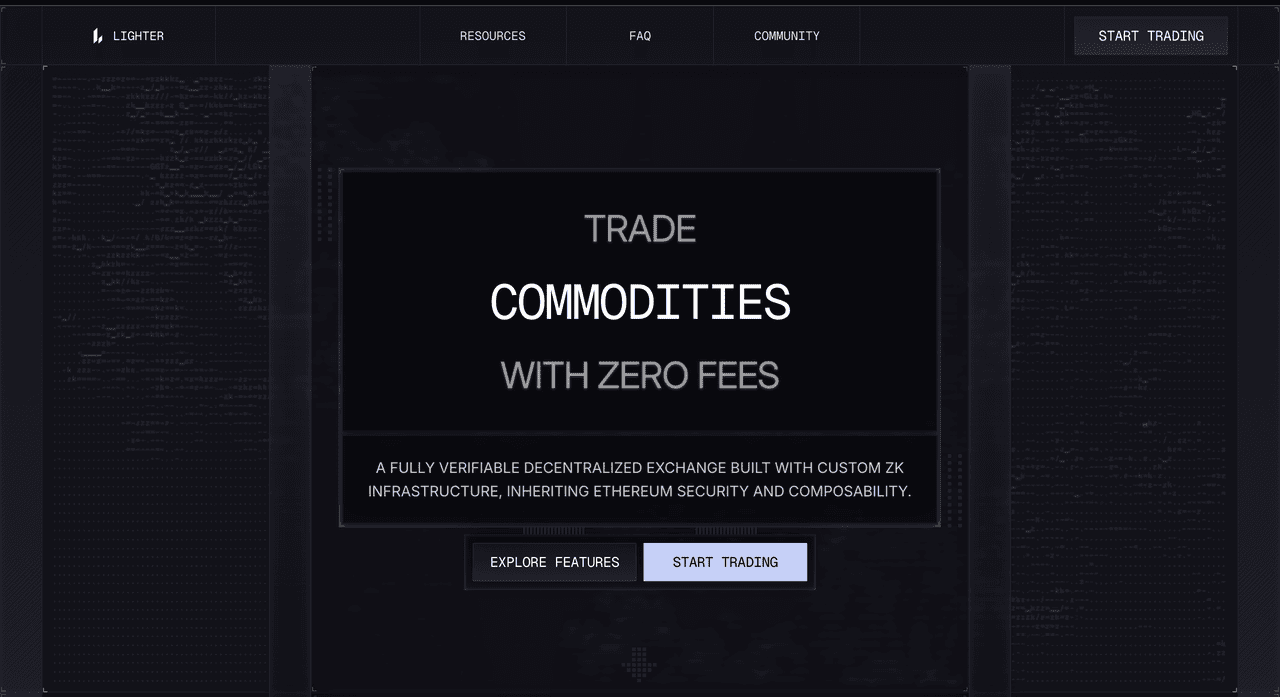
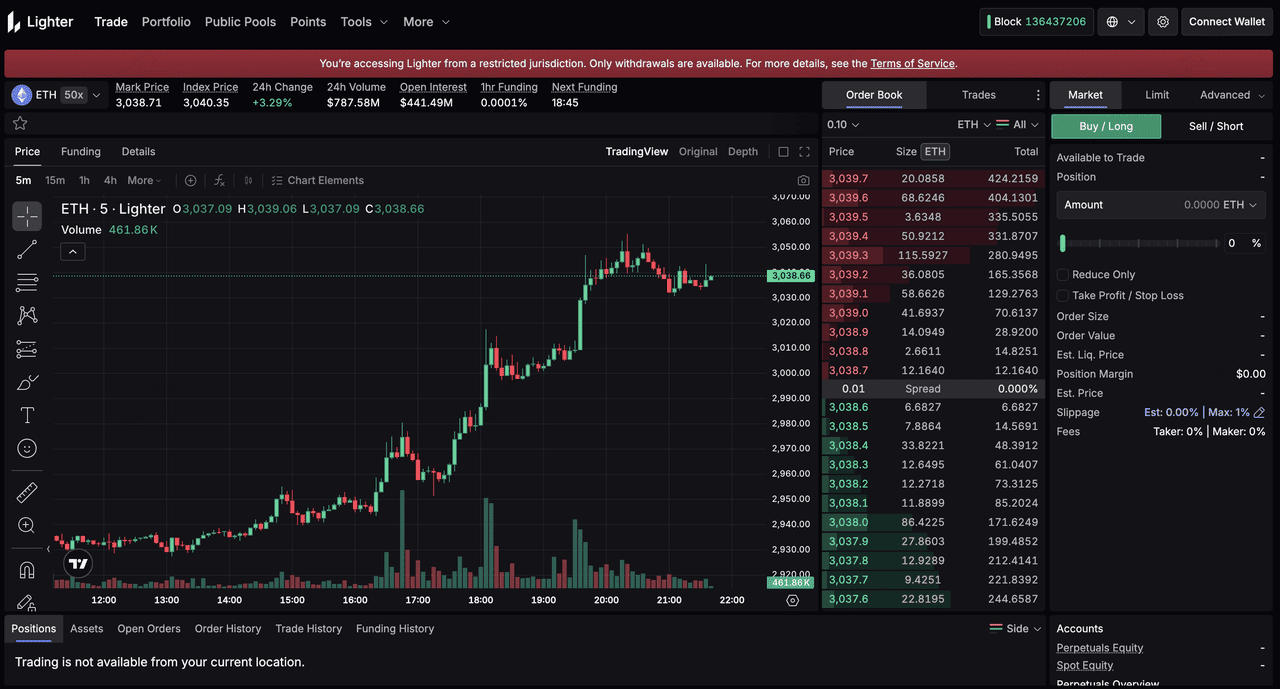
Users can Trade stocks and perpetuals with zero fees on Lighter as a fully verifiable decentralized exchange (DEX) powered by custom zero-knowledge (ZK) infrastructure that inherits Ethereum's robust security and composability. Built as a high-performance ZK rollup on Ethereum, Lighter optimizes for exceptional speed and scale, generating cryptographic proofs for every operation, including order matching, cancellations, and liquidations, to ensure provably fair, censorship-resistant execution with price-time priority and millisecond latency capable of processing tens of thousands of orders per second. By leveraging Ethereum as the base layer for public proof verification and secure deposits/withdrawals, the platform strictly adheres to predefined rules, eliminating favoritism while delivering institutional-grade reliability at minimal costs: zero fees for retail traders and competitive rates for high-frequency participants. Experience on-chain trading like never before, with transparent order books featuring real-time buys and sells across assets like XRP, SOL, BTC, and DOGE, all backed by verifiable proofs and low-latency performance rivaling high-frequency finance.
What is the Lighter Token Generation Event (TGE)?
Source: Fintelegram
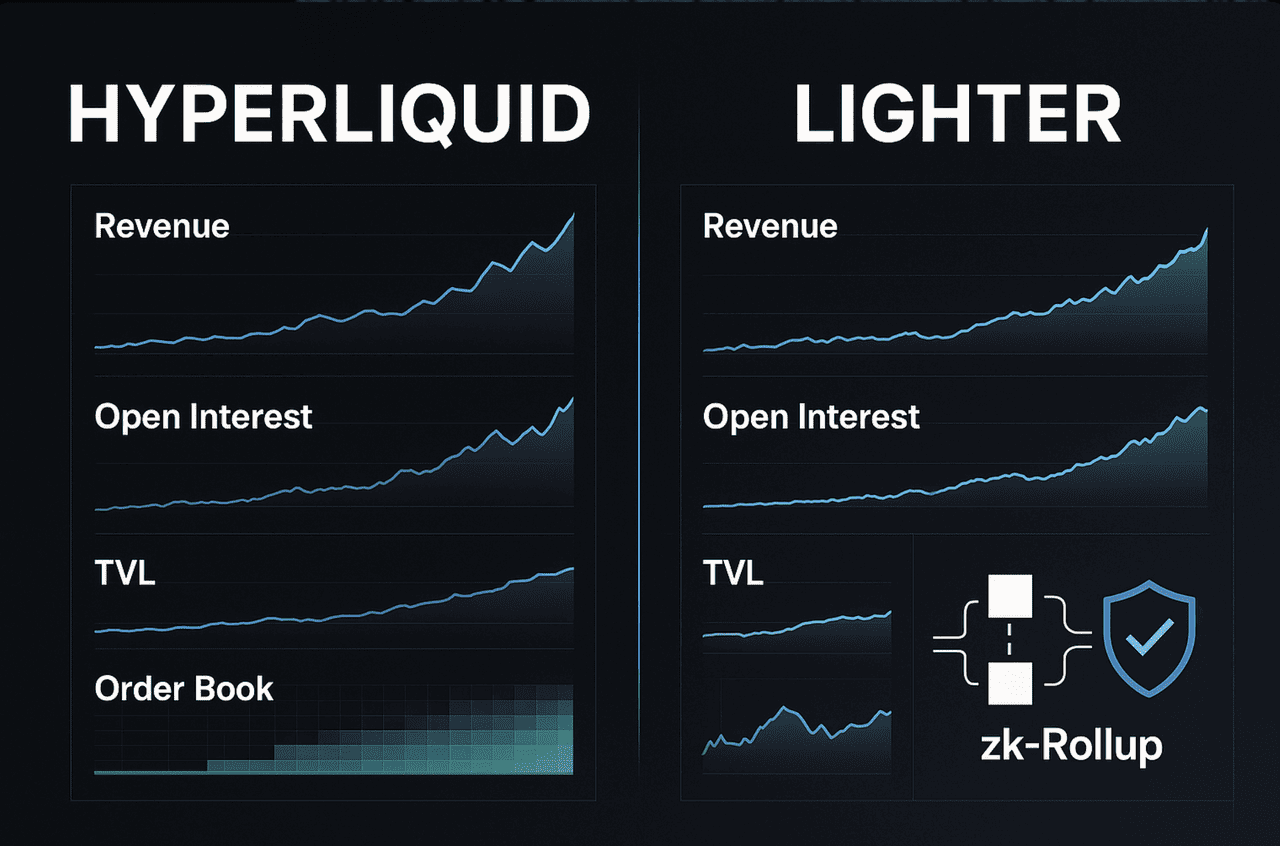
The Lighter Token Generation Event (TGE) is the official launch of the $LIT token, set to happen by December 31, 2025, creating the native utility token for the platform. This event will mint the total supply of 1 billion $LIT tokens, with the token debuting directly on Lighter's exchange before potential listings on platforms like Coinbase and Bybit, which have already added it to their roadmaps. The TGE is designed to enhance governance, value accrual, and ecosystem incentives, with buybacks planned to support token stability. Market signals, including pre-market pricing on Hyperliquid implying a $3.5 billion fully diluted valuation (FDV) and OTC points trading at $90 (suggesting a $4.2 billion FDV), highlight anticipation. Unlike many launches, $LIT will have no paid CEX listings, focusing instead on organic growth and community allocation.
What are the Key Features of Lighter?
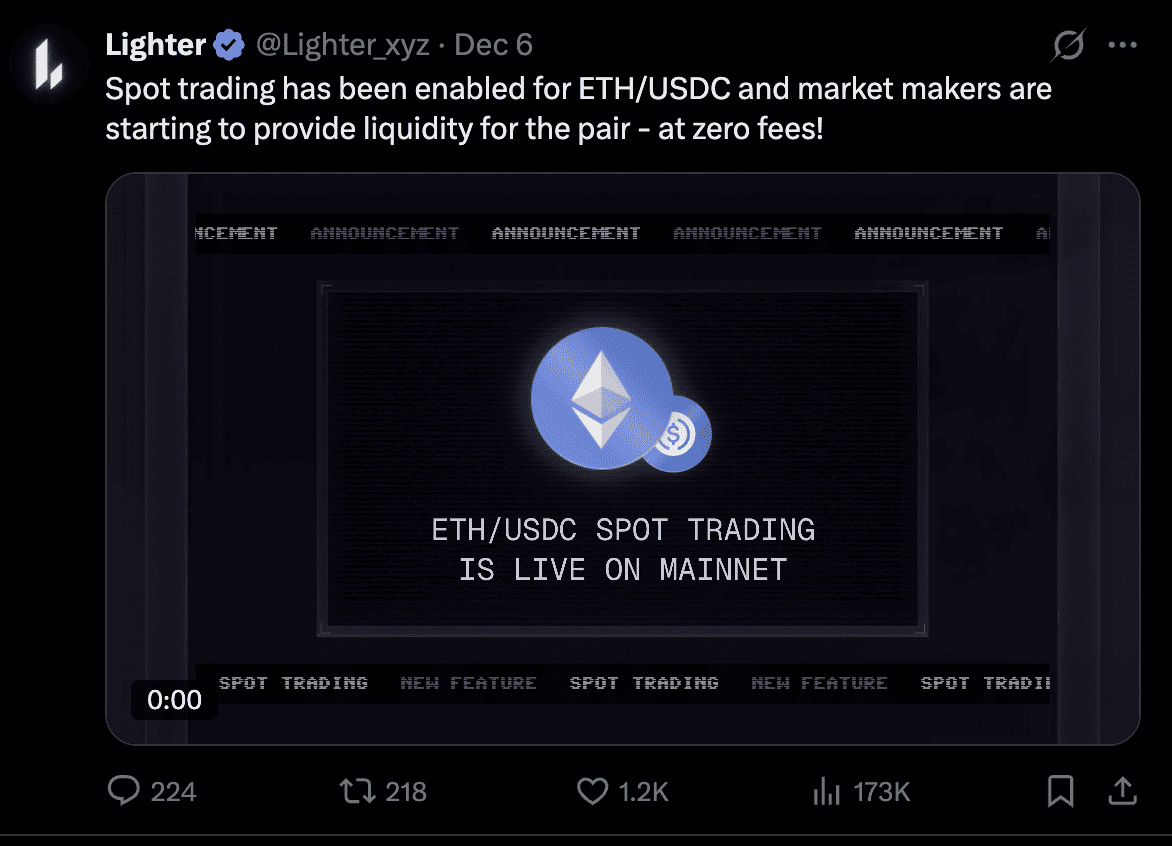
Lighter boasts several standout features that make it a competitive force in the DeFi space, including a zk-powered centralized limit order book (CLOB) for fast, secure trades, zero-fee spot trading for ETH (with plans to expand to dozens of assets), and support for RWA perpetual contracts where it leads with $273 million in OI and $484 million in trading volume. Additional features include premium accounts for revenue generation, portfolio margin for capital efficiency, and upcoming integrations like prediction markets and tokenized stocks. With a mobile app in development and a focus on composability via zkEVM, Lighter aims for broader accessibility, already achieving $32.33 million in spot WETH value despite limited assets.
Who created Lighter?
Lighter was founded by a team of experienced blockchain developers and traders, with key contributions from figures like Vlad Novakovski, who has emphasized Ethereum's L2 optimizations in public discussions. The project secured $68 million in funding at a $1.5 billion valuation, led by prominent investors such as Founders Fund (known for backing SpaceX and Stripe) and Ribbit Capital. This backing underscores the team's vision to build decentralized trading infrastructure for fintech and institutions. While specific founder details remain low-profile, the team's focus on RWA and spot expansions reflects expertise in scaling DeFi products, with ongoing developments like the zkEVM sidecar highlighting their technical prowess.
What and When is the Lighter airdrop?
The Lighter airdrop is a distribution of 250 million $LIT tokens (25% of total supply) to participants in its points program, confirmed to occur alongside the TGE by December 31, 2025. Eligible users, who accumulated points through trading strategies via UI or API in Seasons 1 and 2 (ending September 30 and recently, respectively), will receive tokens directly in their Lighter wallets without vesting or claims. This no-frills approach aims to reward early adopters, with an optional allocation form allowing splits across up to five wallets (submissions due by Friday). The airdrop follows sybil filtering to ensure fairness, boosting value for genuine participants, and aligns with 50% community allocation for sustained engagement.
How does the Lighter Airdrop Work?
The Lighter airdrop operates on a points-based system where users earned rewards through organic trading activities, with over 11.7 million points distributed across two seasons. Points translate directly to $LIT allocations, with the system designed to favor consistent, non-sybil behavior, recent filters have redistributed points to genuine users. Upon TGE, tokens are auto-deposited into main Lighter accounts (or allocated wallets if specified), enabling immediate use on the platform. Revenue from premium features and liquidations ensures post-airdrop sustainability, while value accrues to holders via buybacks. This mechanism not only bootstraps liquidity but also aligns with Lighter's goal of competing with CEXs through low costs and high efficiency.
Step-By-Step on How to Participate and Claim Rewards in the Lighter (LIT) Airdrop
Although the points program has concluded, participation in the airdrop involves verifying eligibility and preparing for distribution:
Step 1: Visit the Lighter Airdrop and Points Activity Page
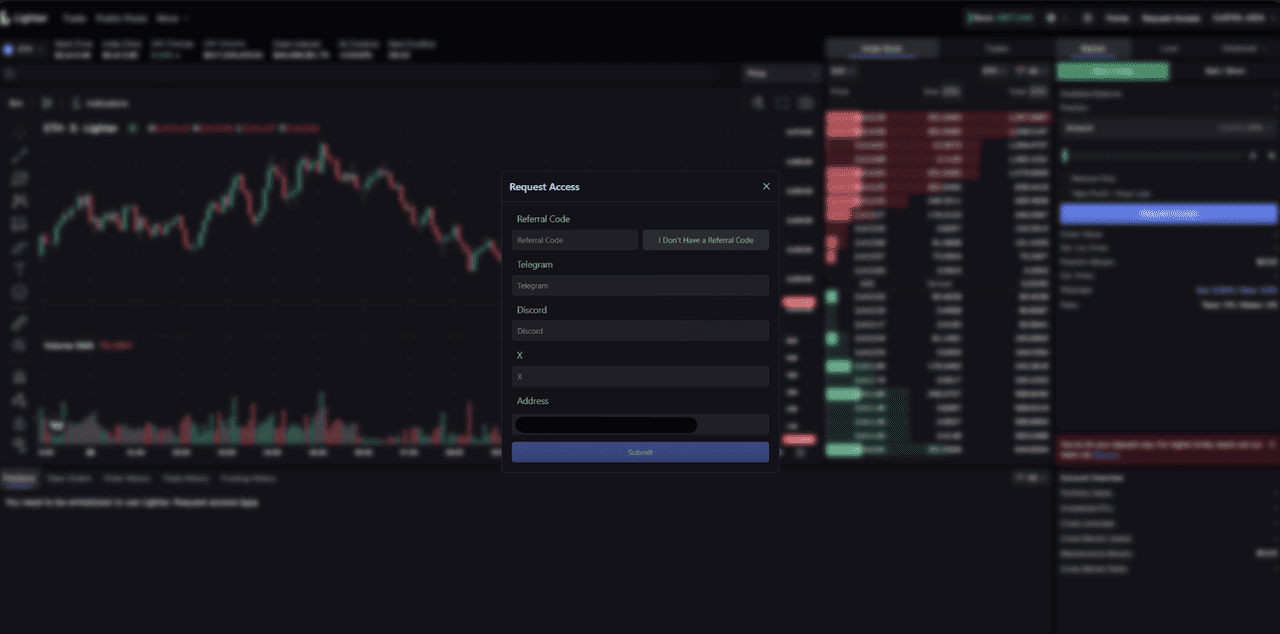
The first step to qualifying for the Lighter (LIT) airdrop or rewards is to visit an official or widely tracked Lighter activity page that outlines how to earn Lighter Points. The primary participation mechanism currently live. While Lighter has not yet launched an official token claim page, its season 2 points-based farming program is actively running and widely recognized as the path toward potential token rewards. Go to the website: https://app.lighter.xyz/ and connect your wallet.
Step 2: Earn Points Through Engagement

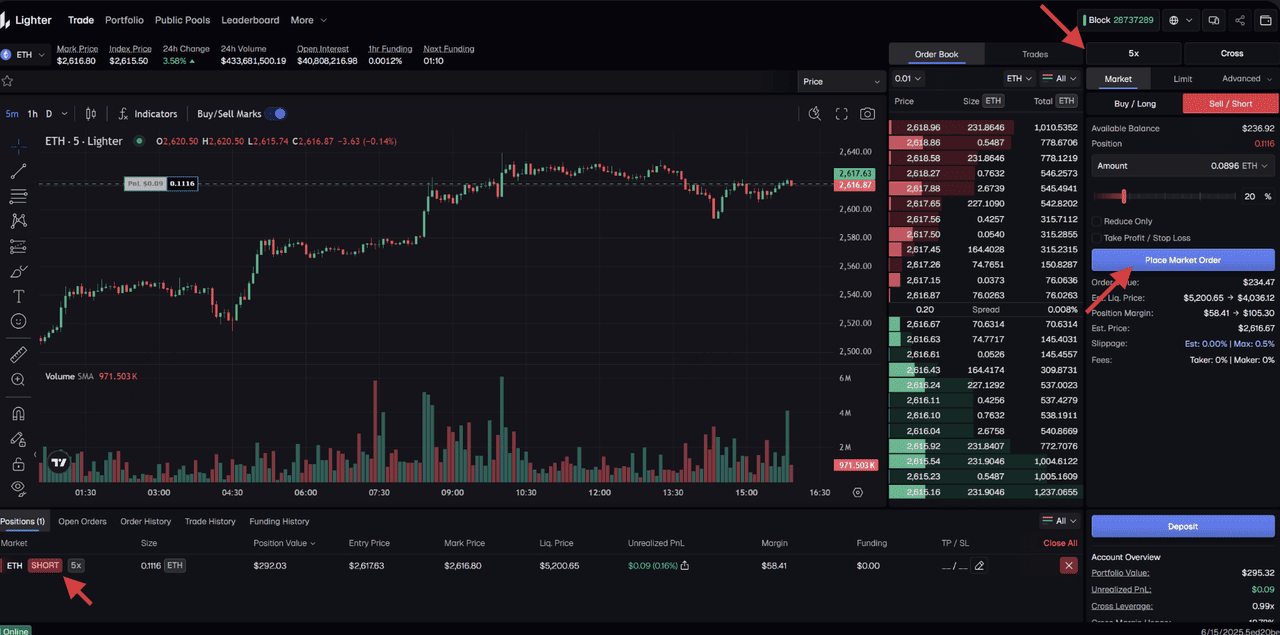
Users can accumulate LIT Points by actively engaging with the platform, including:
• Trading perpetual contracts on Lighter
• Participating consistently during active seasons
• Engaging with platform features and updates
• Taking part in community-driven campaigns (when available)
Source: Crypto Rank
Step 3: Prepare a Compatible Wallet for Future LIT Rewards

BTC/USDT pair on the BingX Spot Market
After participating in LIT's points program, users should ensure they have a self-custodial, compatible wallet to receive tokens when the LIT airdrop and TGE happens. BingX wallet supports multi-chain assets and on-chain interactions, making it suitable for receiving tokens distributed through decentralized platforms like Lighter.
The BingX Exchange Wallet is the most beginner-friendly way to start storing crypto. When you buy BTC directly on BingX, it's automatically stored in your exchange wallet without needing extra setup. This makes it easy to get started, since you don't have to worry about downloading external apps, generating private keys, or backing up seed phrases right away. Beyond storage, BingX gives you quick access to trading features, so you can buy, sell, or convert Bitcoin instantly on the spot market. For more advanced users, the futures market lets you trade BTC with leverage and hedge against price swings. You can also automate your strategy with trading bots, which help manage trades 24/7 without constant monitoring. You can also use BingX AI tools to get market insights, risk analysis, and trading suggestions. Complete the purchase; your BTC will appear in your Funding/Spot wallet on BingX. On top of that, BingX Earn allows you to generate passive income, and Copy Trading lets you follow top traders without handling strategies yourself. This mix of storage, trading, and automation makes the BingX wallet a practical choice for both beginners and experienced traders.
At this stage, users do not need to claim or sign up for anything. The goal is simply to:
• Maintain control of a non-custodial wallet
• Ensure access to WalletConnect when needed
• Be prepared before any snapshot or claim window opens
Step 4: Track your progress on the Lighter Leaderboard
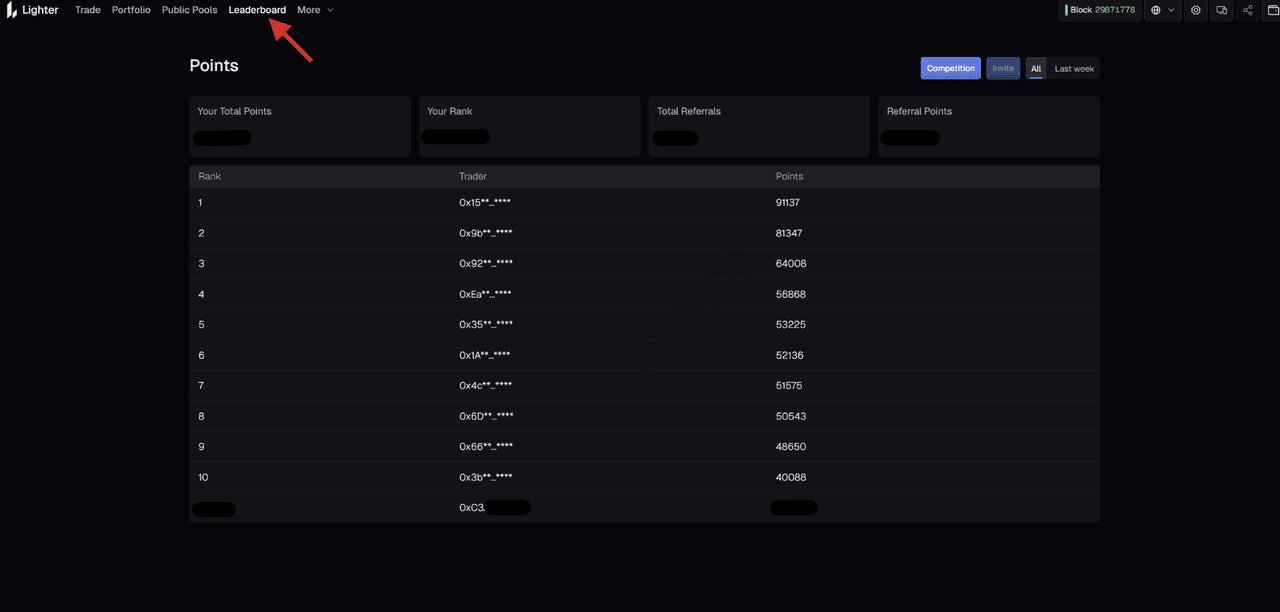
Monitor your ranking and progress directly in the Leaderboard section of the Lighter platform, where real-time standings reflect user activity. While the exact points accrual formula remains undisclosed by the team, community feedback indicates that the highest rewards come from contributing to liquidations and generating substantial trading volume. Every week, a total of 250,000 points are distributed across participants to incentivize consistent engagement. Additionally, once you accumulate at least 100 points, you unlock the ability to invite new users and earn further rewards through referrals. At the moment, there is no official claim page for the airdrop.
How to Maximize Rewards in the $LIT Airdrop

With the Lighter points program concluded and the $LIT airdrop set to occur by December 31, 2025, eligible users should focus on post-distribution strategies to maximize rewards. Hold your fully unlocked tokens strategically to capture value from planned buybacks and revenue accrual mechanisms that channel platform earnings back to holders. Continue engaging actively on Lighter by trading in zero-fee spot markets and low-spread perpetuals, positioning yourself for potential future incentives or seasons where consistent activity is rewarded.
Monitor official channels including Discord, the X account, and lighter.xyz closely for updates on tokenomics, listings, governance votes, or new opportunities. Prioritize security by accessing the platform only through verified links, enabling strong wallet protections, and avoiding unofficial sources to safeguard your airdropped $LIT against phishing and exploits, ensuring long-term growth and safety. Engage in trading on Lighter to benefit from zero-fee spots and low spreads, potentially earning future incentives and diversifying allocations via the form to manage risks. Stay informed on RWA expansions and mobile app launches for early opportunities.
Conclusion
Lighter's $LIT TGE and airdrop represent a pivotal moment for DeFi, offering 250 million tokens to reward community engagement in a platform with $1.44 billion TVL and leadership in RWA trading. By December 31, 2025, eligible users will receive direct, vesting-free distributions, setting the stage for growth through spot expansions, mobile integration, and tokenized assets. Maximizing rewards for the LIT airdrop involves strategic holding and active use.
