

To stake SUN for veSUN, go to sun.io, connect your TronLink wallet, navigate to Governance, select 'Lock SUN', enter your amount and lock duration, and confirm the transaction. You receive veSUN, which earns you 50% of SunSwap's stablecoin pool fees weekly and boosts your liquidity mining rewards up to 2.5x.
SunSwap's veSUN model is the mechanism that separates passive SUN holders from active yield earners. Locking SUN to receive veSUN does three things at once: it entitles you to a proportional share of 50% of all stablecoin pool trading fees, boosts your liquidity mining rewards by up to 2.5x, and gives you governance voting power over how SunSwap distributes its liquidity mining rewards each week.
This guide covers the mechanics in full, walks through the staking process step by step, explains how the 2.5x boost is calculated, and breaks down how to maximise your fee-sharing income from SunSwap's stablecoin pools.
What Is veSUN? Understanding the Vote-Escrowed Model
veSUN (vote-escrowed SUN) is a non-transferable governance and yield token that you receive when you lock SUN for a fixed period on the SUN.io platform. The model is borrowed directly from Curve Finance's veTokenomics architecture (SUN.io formally honors this by granting special rights to veCRV holders), adapted for the TRON ecosystem.
The key property of the vote-escrowed model is that your veSUN balance determines your share of three distinct benefits simultaneously. It is not a governance-only or yield-only token; it ties all three reward streams together, creating a compounding incentive to lock more SUN for longer.
|
Benefit |
What You Receive |
How It Works |
|
Fee Sharing |
50% of stablecoin pool trading fees, paid weekly |
Weekly veSUN snapshot taken. Your share = your veSUN / total veSUN x 50% of that week's stablecoin fees |
|
Mining Boost |
Up to 2.5x multiplier on liquidity mining rewards |
Applied to LP token staking rewards. Calculated via the boost calculator on the SUN.io governance page |
|
Governance Voting |
Votes on which liquidity pools receive SUN mining rewards each week |
Voting snapshot is taken every Thursday at 08:00 SGT. Weight determines pool reward allocation from that Thursday to the next |
veSUN vs. SUN: What You Give Up and What You Gain
locking SUN to obtain veSUN is not a reversible, frictionless swap. You are committing your SUN for a defined lockup period. Understanding the trade-off before locking is essential.
|
What You Give Up |
What You Gain |
|
SUN liquidity for the lock duration — you cannot sell or transfer locked SUN |
Weekly fee income from 50% of stablecoin pool fees |
|
Flexibility to exit early (early exit penalties apply) |
Up to 2.5x mining boost on LP positions |
|
Exposure to SUN price downside while locked |
Weekly governance votes over mining reward allocation |
How to Stake SUN for veSUN: Step-by-Step Guide
Complete all steps in sequence. Do not skip the wallet connection check in Step 1 — transactions on TRON fail silently if TronLink is not properly connected to the correct network.
What You Need Before Starting
- SUN tokens in a TRON-compatible wallet (TronLink recommended for desktop; TronLink Mobile for iOS/Android)
- TRX in the same wallet for gas fees (TRON transactions cost a small amount of TRX as energy/bandwidth; hold at least 10 to 20 TRX as a buffer)
- A decision on your lock duration (longer lock gives more veSUN per SUN; your veSUN balance decays linearly as the lock period approaches expiry)
Step 1: Connect Your Wallet to SUN.io
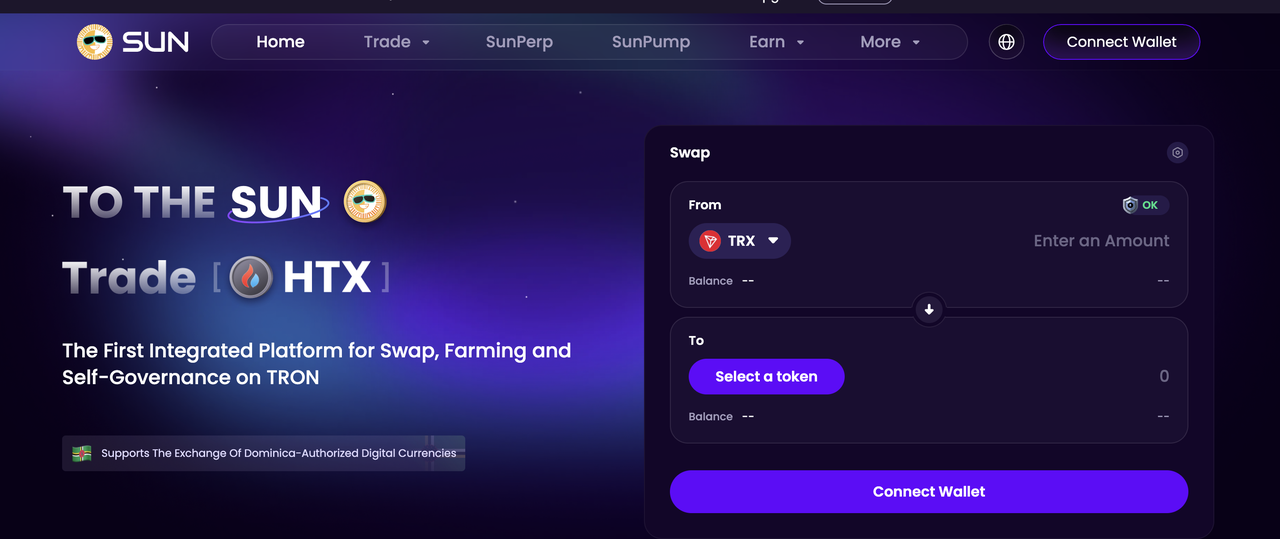
- Open sun.io in a desktop browser (Chrome or Brave recommended for TronLink extension compatibility).
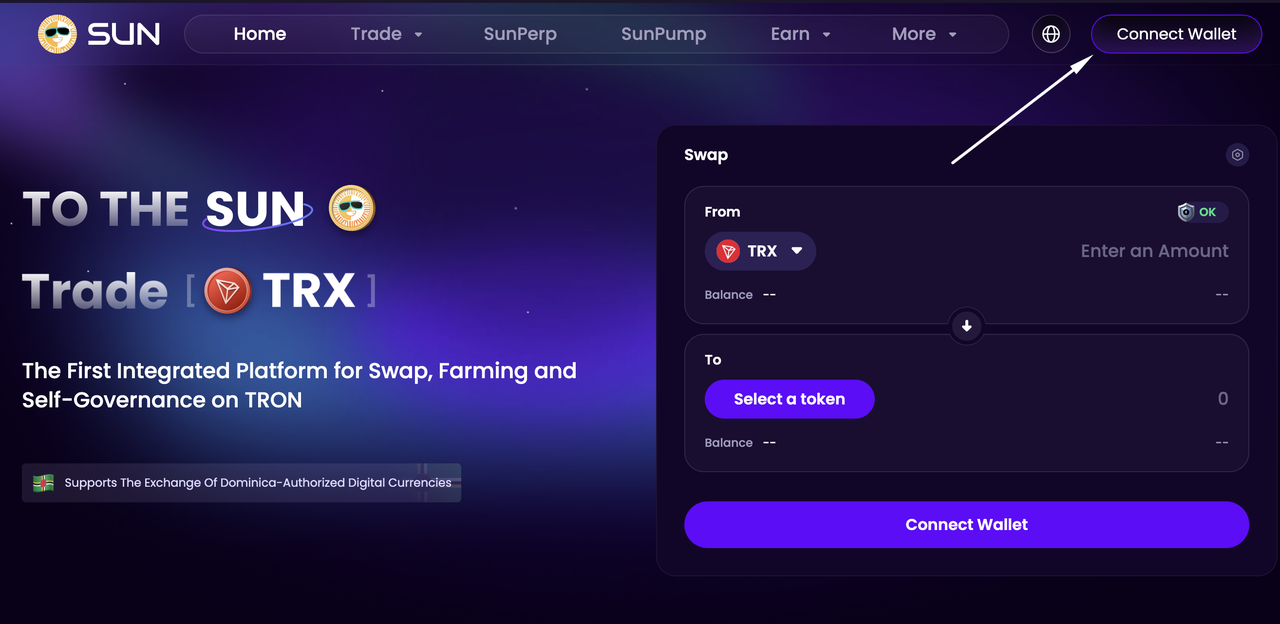
- Click 'Connect Wallet' in the top-right corner of the SUN.io interface.
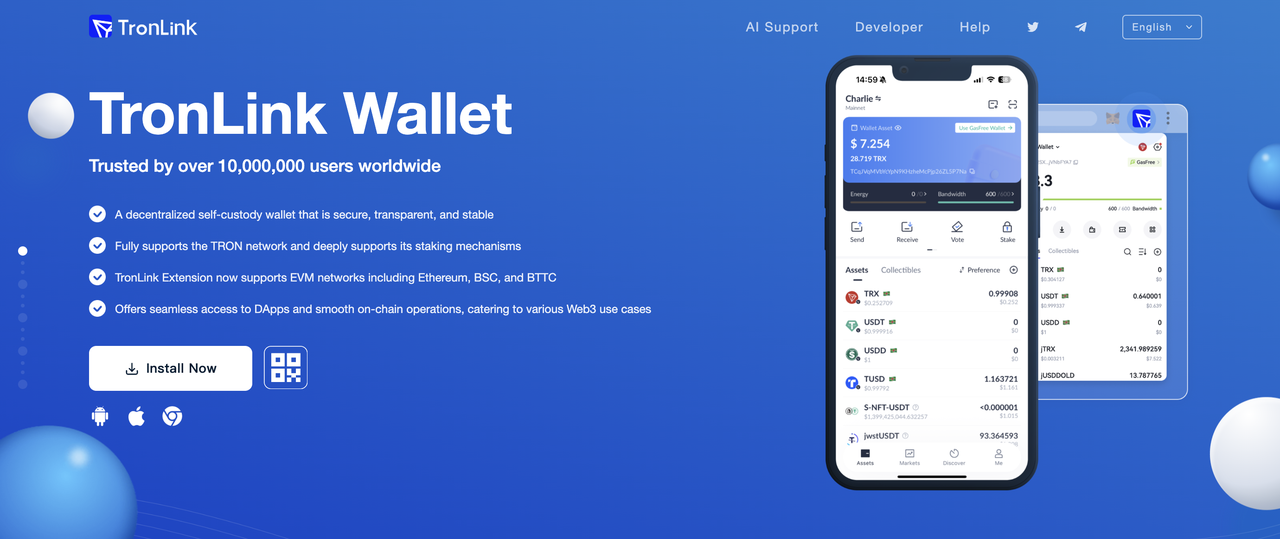
- Select TronLink from the wallet options. If TronLink is not installed, download it from the official TronLink website. Do not download wallet extensions from third-party sources.
- Approve the connection in the TronLink pop-up. Confirm the site URL reads exactly 'sun.io' before approving. Phishing sites that mimic SUN.io are active; always verify the URL.
Step 2: Navigate to the Governance Page
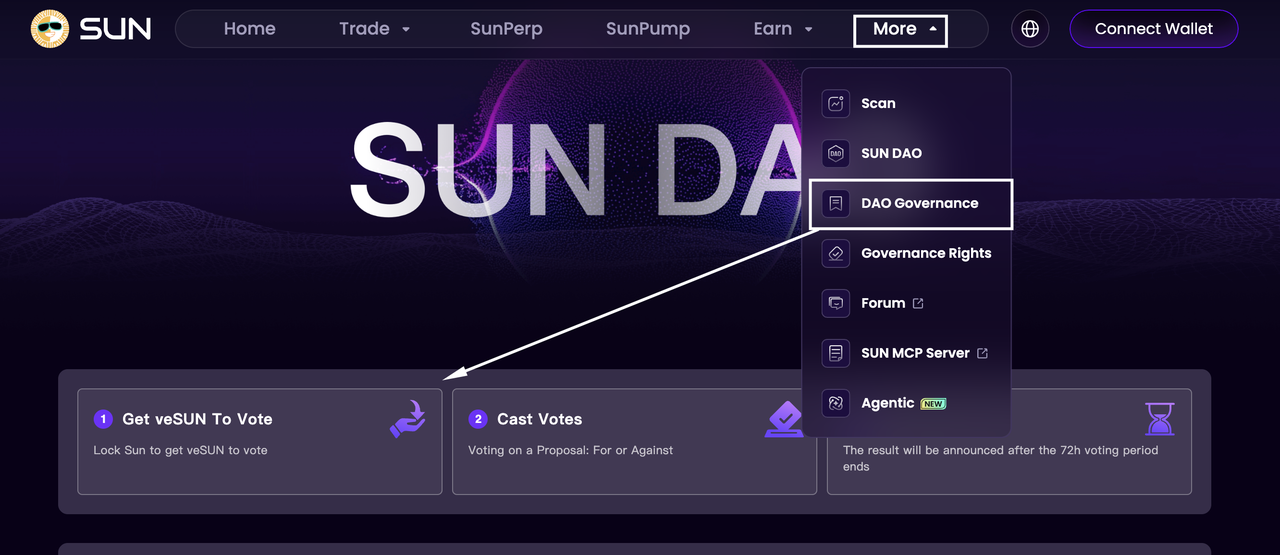
- From the SUN.io main navigation, click 'Governance'.
- Select 'veSUN' or 'Lock SUN' from the Governance sub-menu. This opens the veSUN locking interface.
- Review your current veSUN balance (if any) and the current total veSUN supply. The current total determines your proportional share of the weekly fee distribution.
Step 3: Enter Your Lock Amount and Duration
- Enter the amount of SUN you want to lock. Start with an amount you are comfortable having illiquid for the full lock period. You can add more SUN to an existing lock later without resetting the unlock date.
- Select your lock duration. Longer locks produce more veSUN per SUN locked. Your veSUN balance is calculated as: SUN Amount x (Remaining Lock Time / Maximum Lock Time). At maximum lock duration, you receive the maximum veSUN balance for your staked amount.
- Use the boost calculator on the same page to preview your projected 2.5x mining boost for any LP position you hold. The calculator shows exactly how your veSUN balance translates to a boost multiplier given your current LP token holdings.
Step 4: Confirm the Lock Transaction
- Review all parameters before confirming: SUN amount, lock duration, unlock date, and projected veSUN amount.
- Click 'Lock'. TronLink will display a transaction confirmation pop-up showing the energy cost in TRX. Confirm the energy estimate looks reasonable (a few TRX at most for a standard lock transaction).
- Approve in TronLink. The transaction broadcasts to the TRON network. Confirmation takes 3 to 6 seconds given TRON's block finality speed.
- Verify your veSUN balance on the Governance page after confirmation. Your veSUN balance should reflect the lock immediately.
Step 5: Vote on Mining Pool Weights (Optional but Recommended)
- Navigate to 'Voting' within the Governance section. You will see all eligible liquidity pools listed with their current vote weight percentages.
- Allocate your veSUN votes to the pools you want to receive higher SUN mining rewards. If you are an LP in a specific pool, voting for that pool increases the SUN mining rewards distributed to it, directly boosting your LP income.
- Confirm your vote before Thursday 08:00 SGT. The weekly voting snapshot is taken at this time. Votes submitted after the snapshot take effect the following week.
Note: If you provide liquidity in a specific pool, vote your veSUN toward that pool. You receive both the 2.5x boost on your LP mining rewards AND a higher base reward rate if your vote increases that pool's weight. This compounds the benefit of holding veSUN.
The 2.5x Mining Boost on SunSwap: How It Is Calculated
The 2.5x boost is not a flat multiplier applied universally. It is the maximum possible multiplier, which scales with the ratio of your veSUN holdings to your LP position size. Understanding the formula helps you decide how much SUN to lock relative to your LP position.
The boost formula on SUN.io follows the same structure as Curve Finance's model:
Boosted Reward = Base Reward x min(1.5 x LP Share + (veSUN Share x Total LP), 2.5 x Base) (simplified — use the on-platform boost calculator for your exact numbers)
In plain terms: the more veSUN you hold relative to your LP position size, the closer your boost multiplier approaches 2.5x. A small LP position with a large veSUN balance reaches 2.5x quickly. A large LP position with a small veSUN balance may only receive a 1.0x to 1.5x boost.
|
LP Position Size |
veSUN Held |
Approx. Boost |
Action to Maximise |
|
Small |
Small |
~1.0x (no boost) |
Lock more SUN or reduce LP size |
|
Small |
Large |
~2.5x (maximum) |
Optimal — efficient use of veSUN |
|
Large |
Small |
~1.0x to 1.5x |
Lock more SUN to increase veSUN |
|
Large |
Large (proportional) |
~2.0x to 2.5x |
Use the on-platform calculator to fine-tune |
The boost calculator on sun.io/governance takes your current LP token balance and veSUN balance as inputs and shows your exact current boost multiplier in real time. Use it before adding or removing any LP position to see whether you need to lock additional SUN to maintain your target multiplier.
Fee Sharing: Earning 50% of SunSwap Stablecoin Pool Fees
Fee sharing is the most passive income stream attached to veSUN. Unlike the mining boost (which requires you to also provide LP), fee sharing requires only that you hold veSUN. You do not need to be an active liquidity provider to receive your weekly fee share.
How the Weekly Fee Distribution Works
- SunSwap collects trading fees from all transactions in stablecoin swap pools (USDT, USDJ, TUSD, USDC, and other TRON-based stablecoins).
- 50% of those fees are set aside each week for distribution to veSUN holders. The other 50% goes to the liquidity providers in those pools.
- A snapshot of all veSUN balances is taken once per week. Your fee share for the week is calculated as: (your veSUN balance at snapshot time) / (total veSUN supply at snapshot time) x 50% of that week's stablecoin fees.
- Fees are paid in the stablecoins collected, not in SUN tokens. This means you receive USDT, USDC, or other stablecoins — assets that do not decline with crypto market movements, unlike mining rewards paid in SUN.
- Claim your rewards at any time from the Governance page. Rewards accumulate and do not expire, so there is no urgency to claim immediately (though claiming frequently gives you more liquid assets to compound or redeploy).
Why Stablecoin Fee Income Matters for Yield Calculation
SunSwap's stablecoin pools process significant daily volume because stablecoin swaps on TRON are some of the cheapest and fastest available anywhere in DeFi. A TRON stablecoin swap costs fractions of a cent and settles in seconds, properties that make SunSwap a natural venue for large-volume stablecoin users, particularly in markets where USDT on TRON is a primary currency.
For veSUN holders, this translates to weekly fee income paid in stablecoins, independent of SUN's price action. In periods when SUN's price is flat or declining, the stablecoin fee income continues to accrue based solely on trading volume. This partial decoupling from SUN price is one of the reasons experienced DeFi participants treat veSUN as a yield-generating position rather than simply a governance token.
SUN DAO: Governance Beyond Staking
SUN DAO launched on July 31, 2024, completing SunSwap's transition to fully decentralized autonomous management. This means that all major protocol decisions — fee structures, new pool additions, protocol upgrades, and tokenomics adjustments — are now subject to veSUN holder votes rather than being determined by a centralised team.
For veSUN holders, this governance layer adds a second dimension to the yield strategy. By voting for pools where you hold LP positions, you directly influence the SUN mining reward allocation, giving yourself higher rewards. By voting against competitors' preferred pools, you can shift reward weight toward your own positions. This is known as the 'Curve Wars' dynamic, first observed on Curve Finance and now replicated on SunSwap's TRON-native version.
Governance timing: Votes must be submitted before Thursday 08:00 SGT each week to count for that week's reward cycle. Late votes shift the weight from the following Thursday onwards. Set a weekly reminder if you are actively managing your veSUN votes.
Safe SUN Crypto: Wallet and Security Best Practices
SUN.io has issued active phishing warnings on its official channels. Several sites mimic the SUN.io interface with near-identical URLs. Before any transaction involving locked SUN, follow the security checklist below.
- Verify the URL every session: The correct URL is exactly 'sun.io'. Bookmark it from the official SUN.io social channels (Twitter/X: @defi_sunio) and use only the bookmark. Never navigate to sun.io from a search engine result or a link in a Telegram or Discord message.
- Use TronLink from the official source: TronLink extension is available from the official TronLink website. Do not install from third-party extension stores or app sources. Check that the extension ID matches the official one listed on TronLink's official site after installation.
- Never share your seed phrase: Sun.io will never ask for it or your private key in any interaction. Any prompt requesting a seed phrase is a phishing attempt.
- Review the transaction before confirming: TronLink shows the destination contract address before every transaction. For SUN.io interactions, verify the contract address matches the official SUN.io contract addresses listed in the documentation at docs.sun.io.
- Consider hardware wallet integration: Ledger supports TRON and TRC20 tokens. For large SUN positions, using a Ledger device with TronLink provides hardware-level transaction signing security.
- Revoke unused approvals: TRON smart contracts, like Ethereum contracts, can hold persistent spending approvals. Review and revoke approvals for contracts you no longer actively use through TronLink's built-in permission manager.
How to Buy SUN on BingX and Start Staking
If you do not yet hold SUN tokens, BingX's spot market is one of the most straightforward ways to buy SUN before staking it on SunSwap. The full flow from purchase to staked veSUN position takes under 15 minutes once your BingX account is verified.
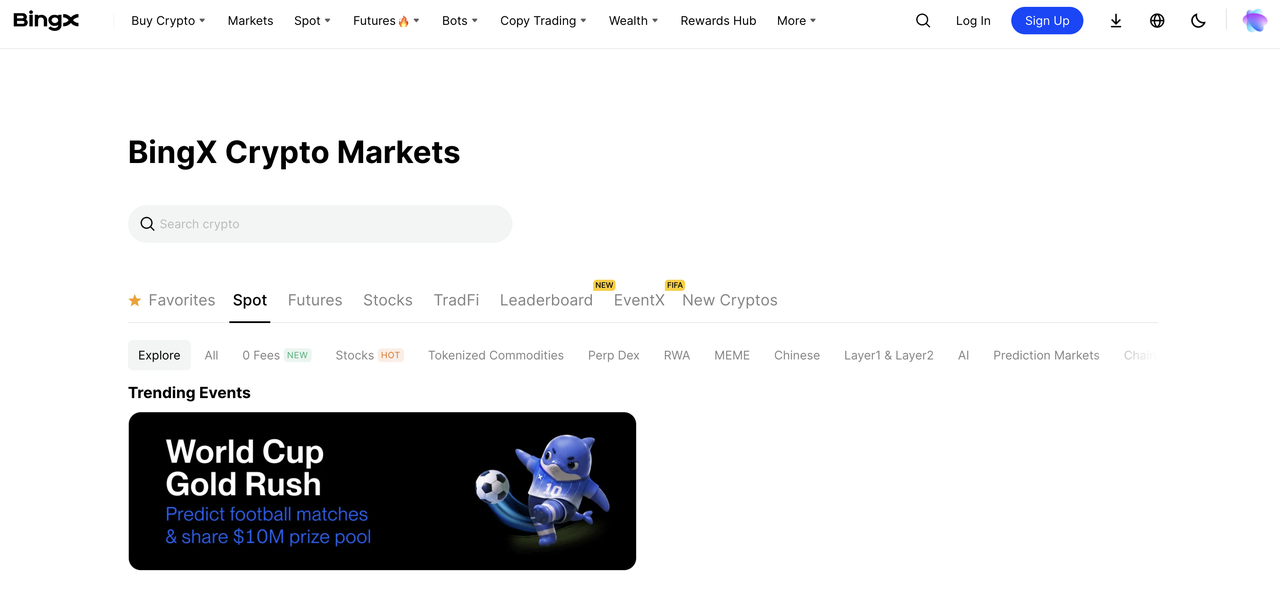
1. Log In and Navigate to Spot Trading
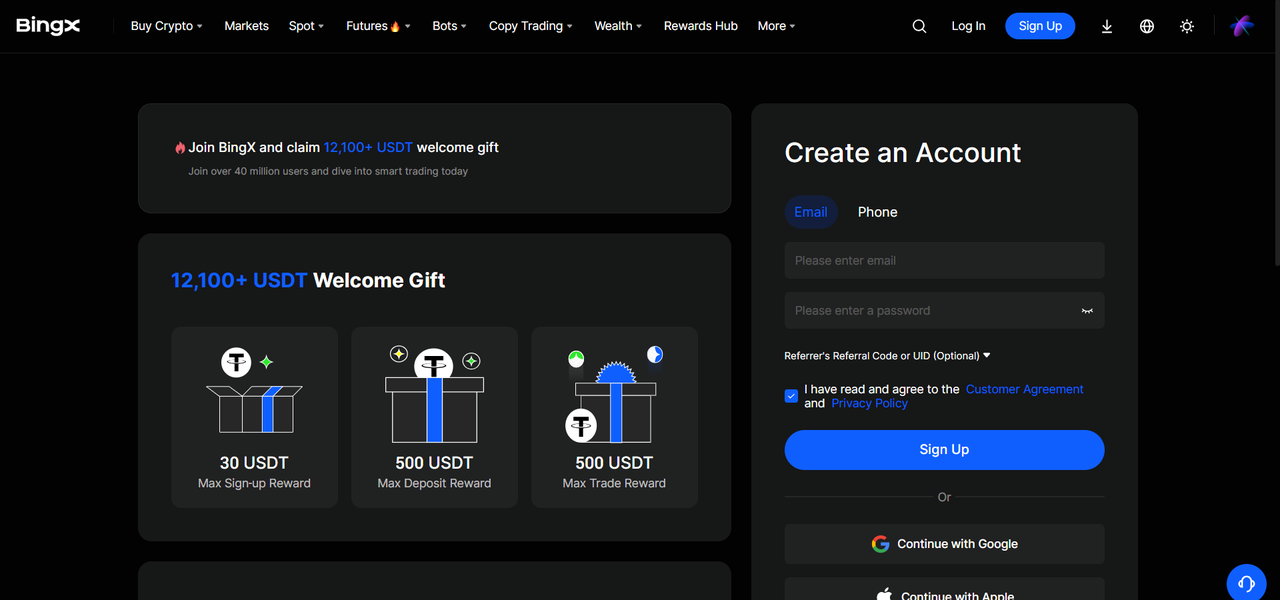
Go to BingX and log into your account. If you are new, create an account and complete identity verification (KYC) to unlock full withdrawal access; this is required before you can send SUN to an external wallet.
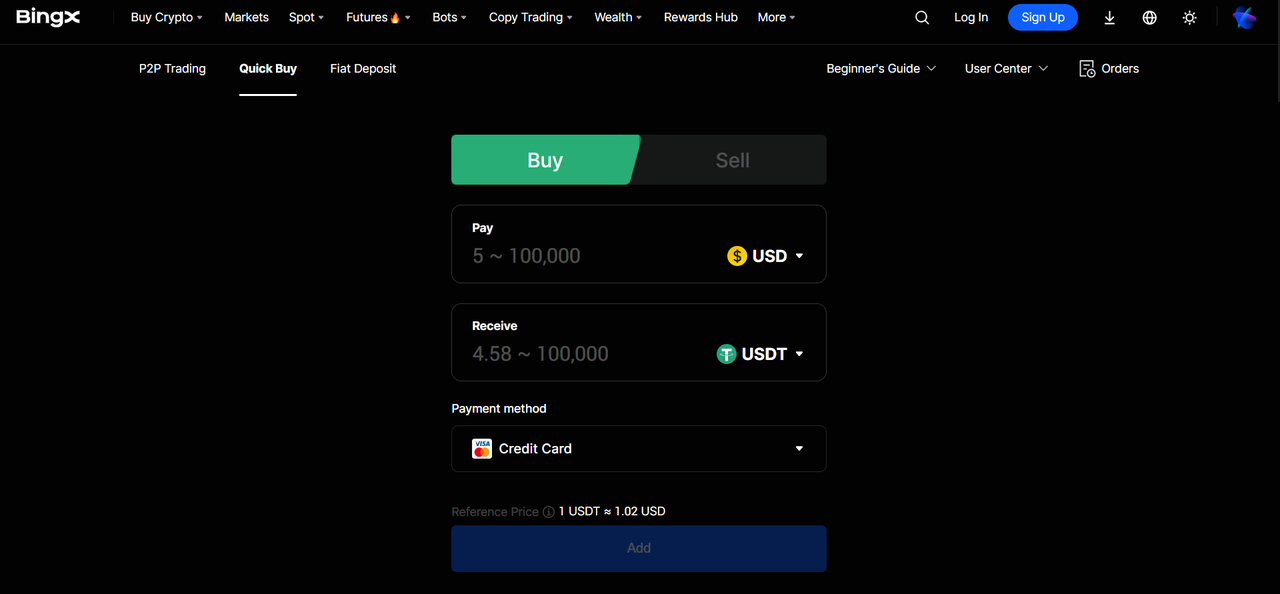
2. Deposit USDT
Fund your account via crypto transfer or use Quick Buy to purchase USDT directly with a Visa or Mastercard. USDT is the base currency for the SUN trading pair.
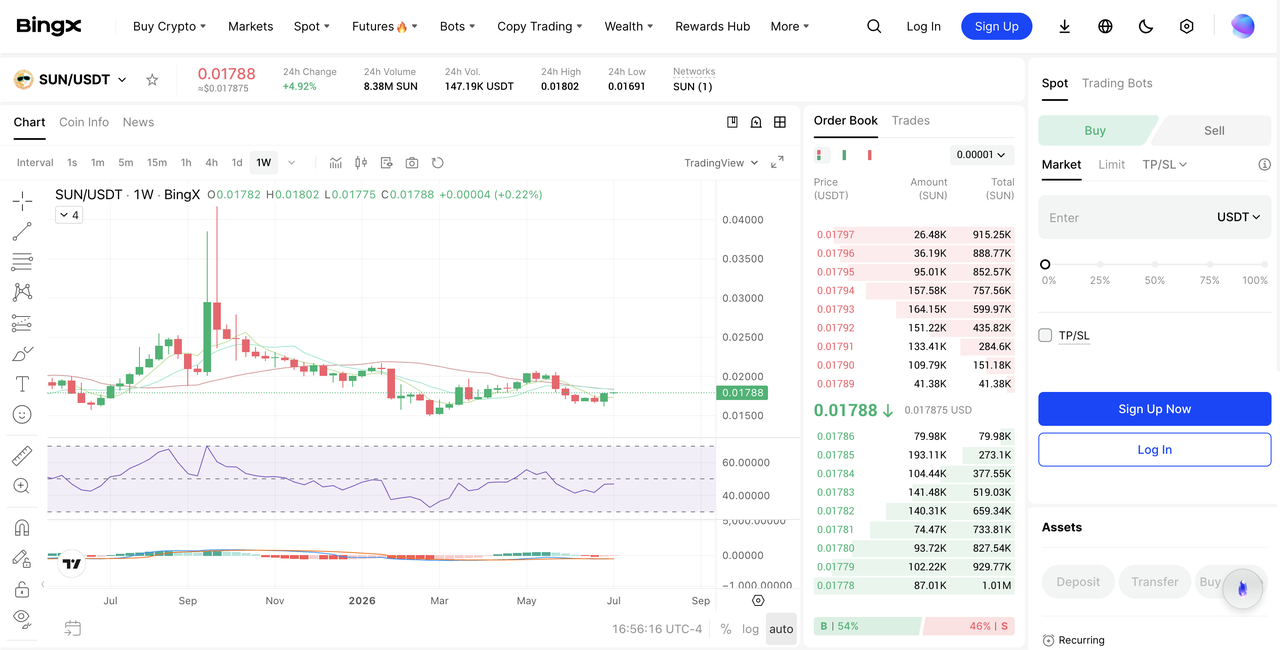
3. Search SUN/USDT and Place a Limit Order
Open the SUN/USDT spot pair using the search bar. SUN's daily volume is moderate, so use a Limit order rather than a Market order. Set your target entry price and let the order fill rather than accepting whatever the spread gives you at market.
4. Withdraw SUN to Your TronLink Wallet
Once your purchase confirms, go to Withdraw and select SUN. In the network selector, choose TRC20 and paste your TronLink TRON wallet address as the destination.
Three things to confirm before sending:
- Network is set to TRC20, not ERC20 or any other chain
- The destination address starts with a capital T (standard TRON address format)
- You have at least 10 to 20 TRX in your TronLink wallet to cover gas on the staking transaction
Sending SUN on the wrong network results in permanent loss of funds. BingX cannot reverse withdrawals once broadcast.
5. Stake on SunSwap
SUN typically arrives in your TronLink wallet within 1 to 5 minutes of the BingX withdrawal confirming. Once it appears, navigate to sun.io and follow the veSUN staking steps in the guide above.
Conclusion: Stake SUN Once, Earn Stablecoins Weekly
Most DeFi yield strategies require you to be active: monitoring prices, rebalancing positions, chasing the next incentive programme. veSUN is the opposite. You lock SUN once, set your weekly governance vote on Thursday, and collect a proportional share of SunSwap's stablecoin pool fees every week in USDT, USDC, and other stable assets, regardless of SUN's price.
The 2.5x mining boost compounds that if you also provide liquidity. The governance vote compounds it further if you direct reward weight toward pools where you hold LP positions. Three income streams from a single lock decision: fee sharing in stablecoins, boosted LP mining rewards, and a vote that increases those rewards. That is the veSUN proposition in full.
The entry point is straightforward: buy SUN on BingX, withdraw via TRC20, connect TronLink to sun.io, and lock. The longer you lock, the more veSUN you receive and the higher your weekly fee share. Start with an amount and duration you are comfortable committing, use the on-platform boost calculator to check your multiplier, and let the weekly fee distributions accumulate from there.
Related Articles
- Making Every Trade Efficient: A Guide to Stable Spot Portfolio Growth
- Risk Management in Crypto Trading: 7 Rules Every Trader Must Know
- How to Keep a Trading Journal: A Complete Guide for Crypto Traders
- Implied Volatility in Crypto: What It Means and How to Trade It
- Altcoin Season: What It Is, How to Spot It, and How to Trade It
FAQs on Staking SUN for veSUN on SunSwap
1. What is veSUN?
veSUN (vote-escrowed SUN) is a non-transferable token received when you lock SUN on SUN.io for a fixed period. It entitles holders to 50% of SunSwap's weekly stablecoin pool trading fees, a liquidity mining boost of up to 2.5x, and voting rights over pool reward allocations in the SUN DAO.
2. How much veSUN do I get per SUN?
Your veSUN amount depends on how long you lock your SUN. The formula is: veSUN = SUN Amount x (Remaining Lock Time / Maximum Lock Time). Locking for the maximum period gives you the maximum veSUN per SUN. Your veSUN balance decays linearly as the lock period progresses toward its end date.
3. What fees do veSUN holders earn?
veSUN holders earn 50% of all trading fees generated in SunSwap's stablecoin swap pools. Fees are distributed weekly based on a snapshot of veSUN balances. They are paid in the stablecoins collected from trading (USDT, USDC, etc.), not in SUN tokens.
4. What is the 2.5x yield boost?
The 2.5x boost is the maximum multiplier applied to your liquidity mining rewards on SunSwap. It is not a flat multiplier — it scales based on the ratio of your veSUN holdings to your LP position size. Use the boost calculator on sun.io/governance to see your exact current multiplier. A smaller LP position relative to your veSUN holdings reaches the 2.5x maximum more easily.
5. Is SunSwap safe?
SunSwap is a TRON-native DeFi protocol with an established track record since 2020. As with all DeFi protocols, it carries smart contract risk. SUN.io has issued active phishing warnings — always verify you are on the correct URL (sun.io) before connecting your wallet. Use TronLink from the official source and never share your seed phrase.
6. What is the SUN DAO?
SUN DAO is the decentralized autonomous organization launched on July 31, 2024, that governs the SUN.io protocol. veSUN holders vote on pool reward weights, protocol parameters, and ecosystem development proposals. Governance votes are finalized from a weekly snapshot taken every Thursday at 08:00 SGT.
7. What is SunSwap?
SunSwap is TRON's primary decentralized exchange protocol for automated liquidity provision. It supports TRC20 token swaps, stablecoin exchanges via the StableSwap model, liquidity mining, and governance. It is accessible at sunswap.com and is part of the SUN.io ecosystem alongside the SUN governance and veSUN staking system.
