
The global capital markets in mid-2026 are closely monitoring the enterprise technology ecosystem as the lines between traditional hardware manufacturing and cloud-based software architectures permanently dissolve. BlackBerry Limited (ticker symbol: BB) serves as a primary vehicle for global growth investors aiming to capture a massive secular shift toward intelligent edge devices and connected vehicles. By anchoring its core portfolio operations in high-margin enterprise software licenses rather than legacy mobile handsets, the transformed technology vendor presents a unique tactical allocation for the current macroeconomic climate.
As alternative asset platforms scale their product frameworks to compete directly with classic equity brokerages, institutional desks are re-evaluating enterprise software multiples to protect net investor yields. Wall Street analysts indicate that the traditional tracking parameters for turnaround software equities are undergoing a thorough re-rating throughout the second half of 2026. For international traders monitoring secular shifts in decentralized infrastructure, automotive operating systems, and network defense rails, tracking the performance metrics of the company has become a core strategic imperative.
Read more: Nokia Stock Price Prediction 2026: $20 Street-High AI-RAN Supercycle or Legacy Telecom Value Trap?
Key Highlights: Top 5 Things for Tech Investors to Know in 2026
- The Dominant Automotive OS Footprint: Operating as an industry standard for safety-certified embedded software, the QNX operating system has achieved immense global distribution. This software forms an essential core layer for automotive manufacturers transitioning toward complex, next-generation software-defined vehicle architectures.
- The High-Margin Software Transition: Moving past its historical legacy as a hardware-dependent handset developer, the enterprise structure relies entirely on intellectual property, recurring enterprise subscriptions, and software-as-a-service (SaaS) frameworks that feature exceptionally high gross margins.
- Rising Critical Infrastructure Protections: Capitalizing on tightening global security requirements, the secure communications and endpoint control frameworks shield multinational corporate clients and government agencies from complex network exploits and coordinated ransomware threats.
- A Massive Backlog of Unlocked Royalties: Supported by an expansion in active automotive development licenses, the company has compiled a long-term future royalty backlog nearing $1 billion. This accumulation provides steady, highly visible revenue generation streams for future fiscal years.
- Profitable Turnaround Execution Acceleration: Breaking away from multi-year operational losses, recent financial performance marks consecutive profitable quarters. This consistent net-income delivery shows that the long-term strategic transition into a pure-play enterprise software house is successfully translating into sustainable cash flows.
What Is BlackBerry Limited (BB)?
Source: Google
BlackBerry Limited, formerly known as Research In Motion (RIM), is a Canadian multinational software enterprise specializing in secure intelligent communications, end-to-end cybersecurity solutions, and the rapidly growing Internet of Things (IoT) edge market. Founded in 1984, the enterprise initially disrupted global technology sectors by engineering the premier wireless mobile devices that completely dominated consumer markets from 1999 to 2016. After shifting its consumer mobile division to external partners and subsequently ending legacy device support, the organization successfully transformed into a modern B2B software vendor backed by a powerful portfolio of foundational technology patents.
Today, the asset ecosystem operates as a highly liquid financial gateway across two distinct focus disciplines:
- The Internet of Things (IoT) Segment: The branch scales the foundational QNX operating system, powering advanced driver-assistance systems (ADAS), digital cockpits, robotics networks, and commercial medical instrumentation platforms.
- The Cybersecurity and Secure Communications Segment: This pillar implements enterprise endpoint protection tools like BlackBerry Unified Endpoint Manager (UEM) alongside automated alerting suites like BlackBerry AtHoc, serving sovereign government bodies requiring strict data localization.
With its prominent position as a transformed pioneer in digital security, the company has rebuilt massive market presence. In 2026, it operates as a deeply integrated technology play where automated automotive infrastructure networks and public cybersecurity frameworks function side by side.
BlackBerry Stock's Core Details and Key Metrics
- Primary Exchange Position: NYSE and TSX / Mid-Cap Technology Software Segment
- Inception Date: Founded in 1984 (Pioneering secure enterprise communications)
- Corporate Leadership Team: Led actively by CEO John Giamatteo
- Global Headquarters Location: Waterloo, Ontario, Canada
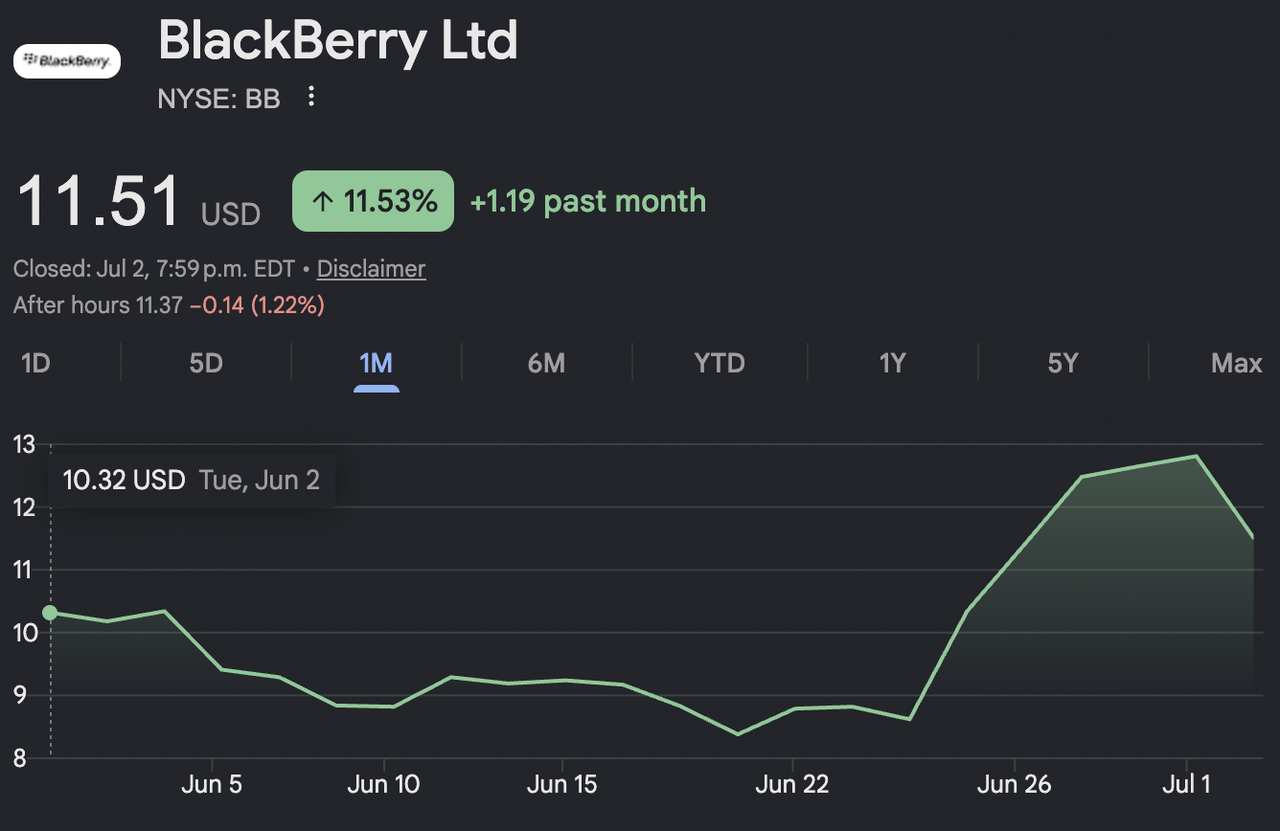
- Current Market Price: As of the July 1, 2026 market close, the stock finished trading at a market valuation reflecting an asset price of $11.51.
Read more: What Is Solana Seeker (SKR), the Token Powering the Solana Seeker Phone?
Key Financial and Operating Metrics Table
The fundamental data tracking the company's enterprise software expansion highlights its operational footprint heading into the second half of the 2026 fiscal year:
|
Financial and Operating Metric Category |
2026 Stated Value Status |
|
Current Stock Price |
$11.51 |
|
Estimated Corporate Market Capitalization |
Approx. $6.70 Billion |
|
Stated Gross Profit Margin Base |
Approx. 79.00% |
|
Trailing 12-Month Financial Performance Status |
5 Consecutive Quarters of Positive GAAP Net Income |
|
Full-Year Projected Corporate Revenue Range |
$594 Million to $621 Million |
|
Stated Full-Year Operating Cash Flow Forecast |
Approx. $100 Million |
|
Core QNX Segment Estimated Royalty Backlog |
Approx. $1.00 Billion |
|
Average 10-Day Trading Volume Profile |
Approx. 14.50 Million Shares |
|
Projected Full-Year Adjusted Earnings Per Share |
$0.16 to $0.20 |
2026 Tech Sector Investment Comparison
The table below contrasts the financial parameters, underlying attributes, and structural tailwinds defining the transformed software play, high-leverage technology derivatives, and broad application networks in the 2026 market cycle.
|
Asset Class / Strategy |
Implied Focus Sector |
Primary Revenue Driver |
Primary Growth Tailwinds |
Structural Risks and Roadblocks |
|
BlackBerry Limited (BB) |
Intelligent Embedded OS and Cybersecurity SaaS |
Connected Vehicle Software Royalties and Cyber Subscriptions |
Accelerating automotive software-defined vehicle adoption; rising public infrastructure digital sovereignty. |
Highly sensitive to delayed automotive manufacturing lines; premium valuation multiple compression risk. |
|
Direxion Daily Semi Bear 3X |
Leveraged Inverse Technology Derivatives |
Triple-Inverse Daily Index Swap Agreements |
Short-term hardware cyclical corrections; rapid downside technological re-ratings. |
Severe compounding volatility decay; structural drag during long-term tech bull runs. |
|
iShares Expanded Tech-Software ETF (IGV) |
Enterprise Application and Cloud Systems Software |
Pure-Play Software Licensing Contracts |
Rapid deployment of enterprise software; predictable recurring SaaS revenue. |
High dependency on compute pricing; zero defense against stock multiple compression shocks. |
Recent Corporate Developments and Strategy
Rather than relying purely on legacy enterprise desktop clients, the company's mid-2026 layout focuses on institutional edge computing and high-performance automated interfaces.
1. Physical AI and Robotics Operating Systems Expansion
Expanding past traditional automotive applications, the company deployed specialized versions of its real-time operating system into industrial robotics, factory automation lines, and advanced semiconductor manufacturing gear. By combining its certified, safety-focused code architecture with emerging AI systems, the firm is successfully capturing critical market share in automated industrial computing sectors.
2. Sovereign Security and FedRAMP Recertifications
As geopolitical friction drives demand for tight regional data control, the company secured a high-level FedRAMP recertification for its secure critical event notification platforms. This compliance hurdle solidifies the company's position as a trusted vendor for western defense networks and federal agencies, helping reverse multi-quarters of slow growth in the cybersecurity segment.
The BlackBerry Investment Thesis for 2026: 5 Pillars of Market Valuation
Source: Zacks
1. The Embedded Automotive Monopoly Moat
With its core software running inside hundreds of millions of vehicles worldwide, the enterprise maintains an exceptionally resilient competitive defensive barrier. Because changing a vehicle's foundational operating system is highly complex, major auto manufacturers rely on this software to maintain digital dashboards, automated driver aids, and vehicle networks.
2. Strong Operating Leverage in Software Licensing
The company's transition away from hardware manufacturing has driven an expansion in gross margins, which now approach 79%. Once initial development costs are cleared, new revenue from development licenses and royalty fees drops directly to the bottom line, accelerating profitability as the business expands.
3. Rising Global Demand for Secure Communications
As corporate data networks face a rising threat from sophisticated ransomware and state-sponsored cyberattacks, the company's long-standing security reputation acts as a key sales driver. This track record positions it to capture steady enterprise security budgets and expand long-term recurring SaaS subscriptions.
4. Capital-Efficient Growth on Fixed Expenditures
Operating with a lean, streamlined cost structure following a comprehensive corporate transformation, the business model requires minimal capital expenditures to distribute new software copies. This setup allows rising sales volumes to rapidly expand free cash flow generation without needing heavy factory expansions.
5. Expansion into Alternative Embedded Industries
By adapting its core real-time operating code to handle industrial automation, medical devices, and smart energy grids, the company is opening large new revenue channels. This diversification insulates the business from cyclical slowdowns in the consumer automotive market.
Read more: 5 Best Mobile Apps to Track Live Bitcoin Price in 2026
BlackBerry's Valuation and Performance Forecasts for 2026: Bull vs. Bear Outlook
Institutional research desks maintain an active dialog regarding the company's trajectory, balancing its high-margin automotive dominance against its elevated market multiple.
|
Institution / Analyst Desk |
2026 Target Valuation Range |
Market Outlook / Stance |
|
Canaccord Genuity Tech Equity |
$16.50 |
Highly Bullish: Driven by a rapid conversion of the $1 billion QNX automotive royalty backlog and strong physical AI software licensing. |
|
CIBC World Markets Division |
$14.00 |
Bullish: Supported by five consecutive quarters of net income and expanding government endpoint security renewals. |
|
Zacks Investment Research |
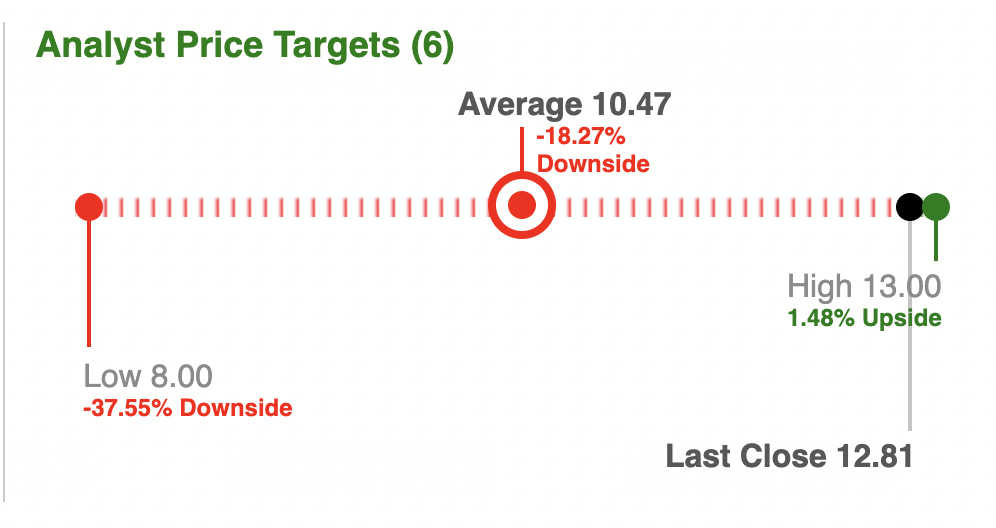
$13.00 |
Moderate Bull: Expects steady operational leverage as gross margins hold near 79% on rising software recurring revenues. |
|
RBC Capital Markets Group |
$11.00 |
Sector Perform: Encouraged by the operational turnaround, but notes the current stock price already factors in near-term revenue updates. |
|
TD Securities Institutional |
$10.50 |
Hold: Projects steady cash flow generation, but points to near-term valuation premiums relative to traditional infrastructure software peers. |
|
Simply Wall Street Models |
$9.00 |
Overvalued Check: Cautious on high trailing price-to-earnings multiples, suggesting the stock has run ahead of its baseline asset targets. |
|
Scotiabank Equity Research |
$6.80 |
Underweight: Concerned that any slowdown in global automotive assembly lines will directly delay high-margin software royalty payouts. |
The Bull Case: Connected Car Spikes Power Scalable Cash Flows
Bulls argue that as electric and autonomous vehicles scale globally, the embedded software value per vehicle will rise significantly. Combined with steady recurring government security contracts, this growing software volume would generate substantial free cash flows, lifting the stock's valuation well above its baseline software targets as it shifts into a highly profitable growth phase.
The Bear Case: Automotive Production Delays Compress Premium Multiples
Bears emphasize that the stock's recent 243% rally has pushed its price-to-earnings multiple well past broader software sector averages. If global automotive manufacturing faces supply chain disruptions or slowing assembly lines, royalty realizations will stall, exposing the stock's premium valuation to significant multi-multiple compression.
Competitive Risks and Sector Pressures for BlackBerry Traders
While the company benefits from strong embedded market presence and expanding margins, its management team must carefully navigate several structural headwinds:
- Automotive Assembly and Supply Dependencies: Operating as a component provider means royalty revenue remains tied to aggregate global auto assembly volumes. If macro headwinds or component shortages delay factory output, the realization of the royalty backlog will slow down.
- Intense Enterprise Cyber Competition: The enterprise cybersecurity landscape features aggressive, well-capitalized cloud native security vendors. If competitors underprice core endpoint services, the company faces potential margin compression or customer churn in its secure communications division.
- Elevated Short-Term Valuation Multiples: Following its substantial year-to-date rally, the equity carries a steep premium multiple compared to historical averages. This premium exposure increases the stock's vulnerability to sudden market-wide corrections if upcoming quarterly reports show any deviation from guidance.
How to Trade BlackBerry Limited (BB) on BingX
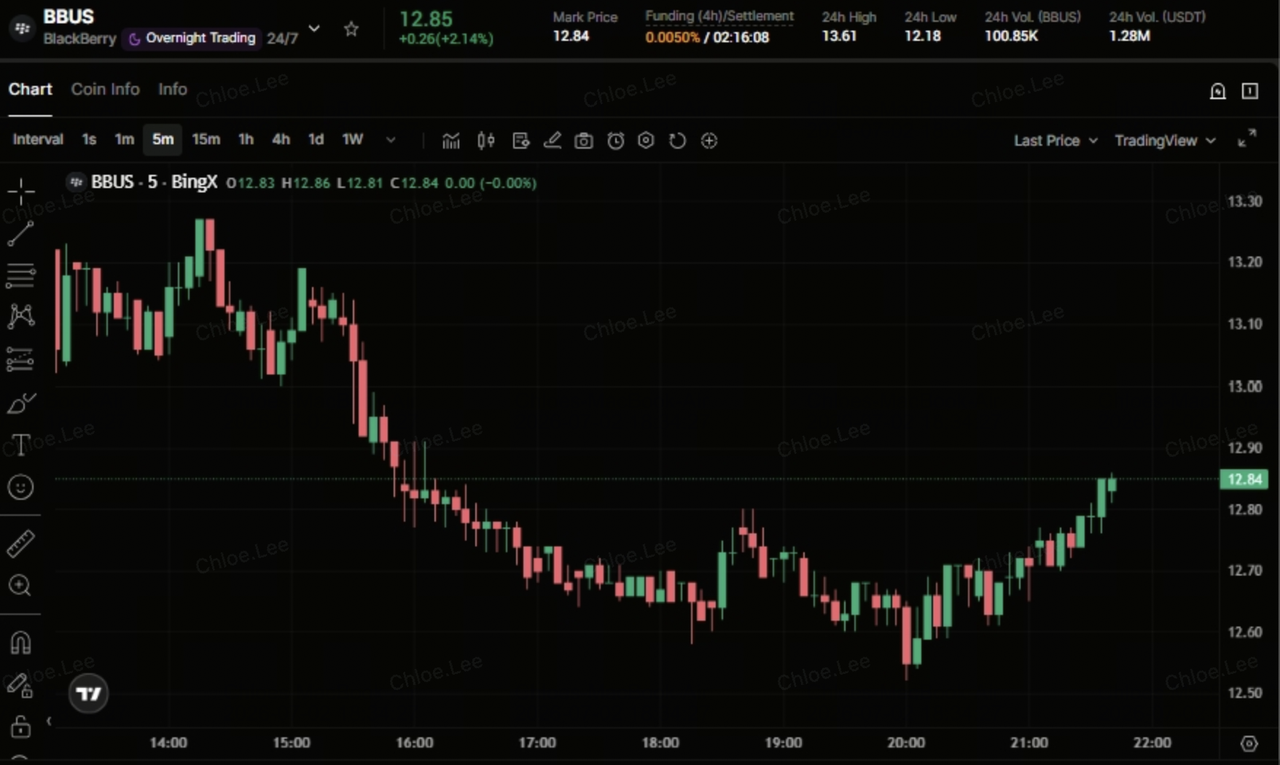
For global market participants looking to take advantage of the volatility surrounding software turnarounds and connected vehicle product cycles, trading derivative contracts offers a highly flexible, capital-efficient alternative to traditional share ownership. This vehicle allows active traders to manage risk or target short-term price movements around major corporate earnings milestones, much like how tech investors track updates across traditional finance (TradFi), semiconductor leaders like NVIDIA, or core digital assets like Bitcoin.
- Go to the BingX TradFi section and select Stock Futures.
- Search for the BBUS/USDT perpetual contract.
- Check the trading session before placing your order. Liquidity is typically lower during extended sessions, which can result in wider spreads and higher volatility.
- Select your Margin Mode (Isolated or Cross) and set your leverage.
- Choose Open Long if you expect momentum, strong chip architecture updates, or positive analog cycle inventory recovery. Choose Open Short if you anticipate margin pressures from heavy CapEx spending, factory execution delays, or valuation pullbacks.
- Set Take-Profit (TP) and Stop-Loss (SL) levels immediately to manage risk against BBUS's price swings driven by earnings, news, or global semiconductor production milestones.
Read More: Arm Holdings (ARM) Stock Outlook 2026: AI Licensing and the $200+ Price Target
Conclusion: Navigating the Software Turnaround Frontier
The enterprise tech sector in 2026 is moving through a major evolution. The investment products positioned for sustainable utility are those that successfully bridge legacy industrial operations with modern intelligent edge software tools. The strategic positioning of this company as a fully profitable embedded OS engine, complete with a massive institutional royalty backlog and deep government security clearings, demonstrates a clear tactical role.
While investors must monitor premium valuation multiples and global automotive factory output trends, the structural convenience of its software licensing model and positive cash flow generation capabilities continue to support its market presence. For short-term derivatives traders and long-term tech allocators alike, tracking the vehicle provides a direct way to participate in the future of alternative enterprise technology as high-margin software platforms and modern trading terminals establish a new global standard.
Risk Reminder: Derivative and leveraged investment contracts carry high market risk. Rapid shifts in central bank interest rates, sudden adjustments to futures clearing regulations, and unexpected margin requirement updates can cause sharp capital movements. Traders should always use disciplined risk management tools, sensible position sizes, and tight stop losses across every active session.
Related Reading
- AAOI Stock Prediction 2026: $260 Photonics Boom or Dilution Trap?
- Lumentum Stock Forecast 2026: Can AI Optics Boom, AI Data Center Supercycle Drive LITE Above $1,200?
- Top 10 AI Hardware Stocks to Watch in 2026: The Architecture Driving Next-Gen Intelligence
- Top AI Data Center Stocks to Buy in 2026: Cloud, Servers, and AI Compute Infrastructure
- Top AI Semiconductor Stocks to Buy in 2026: AI Chips and Supply Chain Complete Guide
