
On February 2, 2026, the Brazilian crypto market entered its most significant regulatory era. The Central Bank of Brazil (BCB) officially operationalized the SPSAV framework, classifying crypto platforms as Sociedades Prestadoras de Serviços de Ativos Virtuais (SPSAVs).
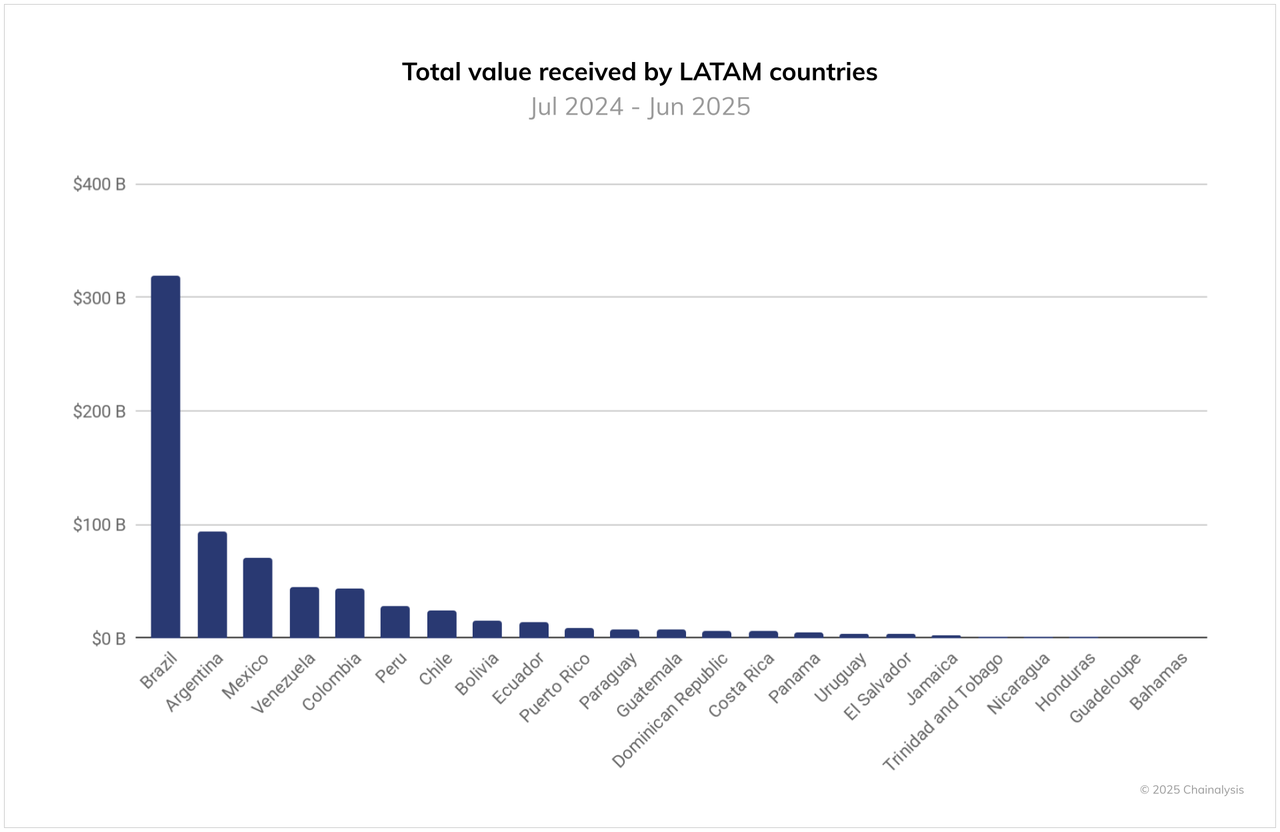
Total value of crypto assets received in LATAM markets | Source: Chainalysis
For the millions crypto traders in Brazil relying on PIX for instant liquidity, the rules of the game have changed. In 2024, Brazil received over $318 billion in crypto value; by 2026, that volume is now protected by mandatory asset segregation and strict cross-border reporting. This article details how the SPSAV framework impacts your daily PIX-to-crypto flow and how BingX ensures your transactions meet these elite compliance standards.
What Are SPSAV Pillars: Why Your PIX Is Now Foreign Exchange Gateway
The BCB no longer views crypto as a peripheral digital hobby. Under Resolution 521, crypto activities are integrated into the traditional financial system with a heavy focus on stablecoins. Since stablecoins like USDT and USDC represent 90% of Brazil’s crypto volume, the BCB now treats these transfers as Foreign Exchange (FX) operations.
Foreign exchanges serving Brazilians must establish a local licensed subsidiary or partner with a Brazilian SPSAV by October 30, 2026. Platforms failing to do so risk being blocked from the PIX network.
Your BRL and crypto are now legally required to be held in accounts separate from the exchange's operating capital. This bank-grade protection ensures user funds are untouchable even in a platform liquidity crisis.
Read more: Navigating Brazil's Crypto Regulations: KYC, AML, and Compliance (2026 Guide)
What Is Know-Your-Wallet (KYW): What to Know Before Moving PIX to Self-Custody
One of the most discussed updates in the 2026 framework is the handling of private crypto wallets like Ledger, MetaMask and Trezor. While self-custody remains legal and supported, the anonymity of the bridge has ended. If you use PIX to buy crypto on an exchange and then withdraw to a private wallet, the SPSAV must document that you are the beneficial owner of that self-hosted address.
Starting February 2026, all domestic transfers between Brazilian institutions must include full originator and beneficiary data. Cross-border transfers will follow this Travel Rule (Phase 1) in early 2027.
For BingX users, this means that while your freedom to move assets to cold storage is preserved, a one-time verification of your external wallet address ensures your account remains compliant with the BCB's anti-fraud monitors.
What Is DeCripto Electronic Form for Brazil's New Crypto Tax Reporting Standard?
Effective July 1, 2026, Normative Instruction (IN) No. 2,291/2025 replaces the old reporting rules. The DeCripto electronic form is now the official ledger for the Federal Revenue Service (Receita Federal). If you use an offshore provider or P2P and move more than R$35,000 per month, you are personally responsible for reporting via DeCripto.
Because PIX transfers are now tied to FX reporting, the tax authorities have a transparent, real-time view of BRL-to-Stablecoin on-ramps.
Read more: Crypto Taxes in Brazil: A Guide to Declaring Your On-Ramp and Off-Ramp Transactions
Comparison of Brazil Crypto Rules: Pre-2026 vs. SPSAV Era
|
Feature |
Pre-2026 Status |
2026 SPSAV Framework |
|
Stablecoin Status |
Unregulated Digital Asset |
Foreign Exchange (FX) Operation |
|
PIX Security |
Standard Transfer |
Asset Segregation Mandatory |
|
Self-Custody |
Anonymous Withdrawals |
Know-Your-Wallet (KYW) Required |
|
Foreign Platforms |
Direct Access |
Must have Local Presence by Oct 30 |
|
Tax Reporting |
IN 1,888/2019 |
New DeCripto Form (IN 2,291) |
The transition from the pre-2026 era to the SPSAV framework marks Brazil’s shift from a fragmented watch-and-wait approach to a rigorous, bank-grade ecosystem. Previously, regulations like Law 14,478/2022 provided a high-level legal definition of virtual assets, but lacked the operational teeth to enforce strict institutional standards. In the pre-2026 landscape, stablecoin transactions were largely unregulated digital swaps, and exchange-user relationships were governed by basic consumer protection laws. Most significantly, asset segregation was a recommended best practice rather than a legal mandate, leaving users vulnerable to platform insolvency, a risk underscored by the $2.4 billion in crypto-related fraud and laundering seen in the years leading up to the 2026 reforms.
Under the new SPSAV Era (Resolutions 519, 520, and 521), crypto-asset service providers must now operate as licensed financial entities with a minimum capital requirement of up to R$37.2 million. The framework introduces mandatory Asset Segregation, legally isolating client BRL and crypto from corporate funds to prevent commingling. Practically, this transforms your PIX transfers: stablecoin flows like USDT and USDC are now formally classified as Foreign Exchange (FX) operations, subjecting them to a $100,000 transaction cap for standard VASPs and granular reporting via the new DeCripto form. Furthermore, the anonymity of self-custody is replaced by Know-Your-Wallet (KYW) protocols, requiring users to verify ownership of private addresses for any withdrawal, effectively bringing the Travel Rule into every digital wallet in Brazil.
How to Secure Your PIX-to-Crypto Flow on BingX: Step-by-Step Guide
To avoid Orphan Deposits or flagged transfers under the Brazil's 2026 crypto rules, follow this operational checklist:
Step 1: Verify Your Local Presence
Ensure your BingX KYC is updated with a valid Brazilian ID (RG or CNH) and your CPF. This aligns your account with the SPSAV licensing requirements and prevents PIX rejection by the BCB’s monitoring systems.
Step 2: Use Matched-Owner PIX Only
Under the new AML rules, the name on your bank account must perfectly match your BingX KYC name. Third-party PIX deposits from friends or business accounts are now automatically reversed to comply with fraud prevention mandates.
Step 3: Map Your Private Wallets
If you plan to move assets to self-custody, complete the Know-Your-Wallet (KYW) verification on BingX. This simple step white-lists your address, ensuring your withdrawals aren't delayed by manual compliance reviews.
Why 2026's SPSAV Regulations Are a Win for Brazilian Crypto Traders
While the SPSAV framework introduces a more rigorous compliance layer, it effectively transitions Brazil into one of the most secure and transparent crypto ecosystems globally. By reclassifying stablecoins as Foreign Exchange (FX) operations and mandating the legal segregation of client assets, the Central Bank of Brazil (BCB) has built a structural defense against the platform insolvencies and exit scam risks that historically plagued the sector. This evolution from an unregulated innovation phase to a bank-grade regulatory environment provides the 6.5 million active Brazilian investors with the same legal certainties and protections found in traditional financial markets.
In this high-stakes landscape, BingX provides an optimized gateway that aligns with the BCB’s 2026 standards, ensuring your PIX transfers are processed through secure, monitored rails. By completing Advanced KYC, you can utilize the BingX P2P Marketplace and fiat-to-crypto tools with the confidence that your transactions meet the latest asset segregation and Know-Your-Wallet (KYW) mandates. This integration allows you to maintain the 24/7 settlement speed of PIX while operating within the safety of an institutional-grade framework, effectively turning regulatory compliance into a competitive advantage for your portfolio.
Risk Warning: Digital asset trading involves substantial risk, including market volatility and potential loss of capital. Ensure you are familiar with the 17.5% flat tax on capital gains and the mandatory DeCripto reporting requirements (IN 2,291/2025). BingX does not provide tax or legal advice; users should consult with a qualified professional regarding their individual compliance obligations in Brazil.
Related Reading
- How to Buy Your First Crypto in Brazil Using PIX: A Step-by-Step Guide (2026)
- Choosing Your Path to Crypto: CEX vs. DEX vs. P2P On-Ramps in Brazil (2026 Guide)
- Cashing Out: How to Sell Crypto and Withdraw Brazilian Reals (BRL) in 2026
- A Deep Dive into On-Ramp Fees in Brazil: PIX, Boleto, Credit Card, and Bank Transfer (2026 Guide)
- Navigating Brazil's Crypto Regulations: KYC, AML, and Compliance (2026 Guide)
- Why 90% of Brazil’s PIX-to-Crypto Volume Is in Stablecoins (USDT/USDC): A 2026 Analysis
