Brazil has already surpassed 25 million people with direct exposure to digital assets, according to the Central Bank’s Financial Stability Report. This positions the country among the world’s largest crypto markets, with much of this growth driven through smartphones. Today, choosing a reliable exchange app is no longer just about visual design: it involves trading fees, security standards, PIX integration, and access to products such as futures trading and copy trading.
With the Central Bank regulations in force since February 2026 (BCB Resolutions 519, 520, and 521), all exchanges operating in Brazil are now required to obtain formal authorization and comply with strict governance and asset segregation standards. This has reshaped the industry. It is now easier to distinguish trustworthy platforms from those that only appear reliable.
Quick answer: The best cryptocurrency exchanges to use in Brazil in 2026 are platforms with native mobile apps, PIX support, spot trading fees starting from 0.1%, and full compliance with Central Bank regulations. To choose the right platform: compare withdrawal and deposit fees, check whether the exchange offers copy trading, review app store ratings, and confirm whether direct BRL deposits are supported.
What Is a Cryptocurrency Exchange and Why the App Matters
A cryptocurrency exchange is a platform where users buy, sell, and trade digital assets such as Bitcoin, Ethereum, and Solana. It functions similarly to a traditional stock brokerage, but for crypto assets. The difference is that the crypto market never closes: it operates 24/7.
Think of an exchange as a shopping mall for cryptocurrencies. You enter, browse prices, decide what to buy, complete the purchase, and exit. The app is your gateway. If it is slow, confusing, or crashes during a trade, you risk missing market opportunities.
For Brazilian users, two factors are decisive when choosing a platform: PIX integration via the P2P marketplace and Portuguese-language support. Exchanges that overlook these two elements tend to lose Brazilian users quickly.
Centralized Exchanges (CEX) vs Decentralized Exchanges (DEX)
CEXs, such as BingX, operate with an intermediary responsible for custodying user assets. You create an account, complete KYC verification, and trade directly through the app. They are more beginner-friendly and support BRL deposits via PIX.
Meanwhile, DEXs, such as Uniswap and PancakeSwap, operate through smart contracts directly on the blockchain. No registration is required, but users need a Web3 wallet and must pay network gas fees. They are generally more suitable for advanced users seeking DeFi exposure.
For most Brazilians looking to buy Bitcoin on mobile using BRL and withdraw funds via PIX, a CEX remains the most practical option.
How to Evaluate an Exchange App Before Opening an Account
With more than 20 exchanges operating in Brazil, choosing the right platform goes beyond brand recognition. Below are the five key factors that matter most in daily use:
Trading fees: the standard market spot fee is around 0.1%. Exchanges charging above 0.5% can significantly reduce profitability for frequent traders. Check the BingX fee guide to better understand the full fee structure.
PIX support: depositing and withdrawing BRL via PIX is now considered a minimum standard for any exchange operating in Brazil. Some platforms still charge additional fees for these transactions, which should be reviewed beforehand.
Security and regulation: since February 2026, exchanges have been required to obtain Central Bank authorization and segregate customer assets from corporate funds. This provides additional protection in the event of platform insolvency. Exchanges with audited Proof of Reserves offer an added layer of transparency.
Product variety: beyond basic spot trading, top exchanges also provide futures trading, copy trading, staking, and grid trading bots. The more tools accessible directly within the app, the better the user experience.
App ratings and reviews: ratings on the Apple App Store and Google Play reflect real user experiences. If an app scores below 4 stars, it is worth researching specific complaints before depositing funds.
Comparison Table of the Top Exchanges in Brazil in 2026
|
Exchange |
Spot Fee |
PIX |
Copy Trading |
App Rating |
Cryptos |
|
BingX |
0.1% |
Yes |
Yes |
4.5/5 |
820+ |
|
Binance |
0.1% |
Yes |
No |
4.4/5 |
700+ |
|
Mercado Bitcoin |
0.3–0.7% |
Yes |
No |
4.2/5 |
200+ |
|
OKX |
0.08% |
Yes |
Yes |
4.3/5 |
700+ |
|
Coinext |
0.25% |
Yes |
No |
4.0/5 |
150+ |
Sources: public platform data, Google Play, and Apple App Store (May 2026).
BingX: Advanced Features with a User-Friendly Interface for All Experience Levels
Founded in 2018, BingX now operates in more than 180 countries with over 10 million registered users worldwide. In Brazil, the platform has gained recognition for combining a beginner-friendly interface with professional-grade trading tools, all within a highly rated mobile app.
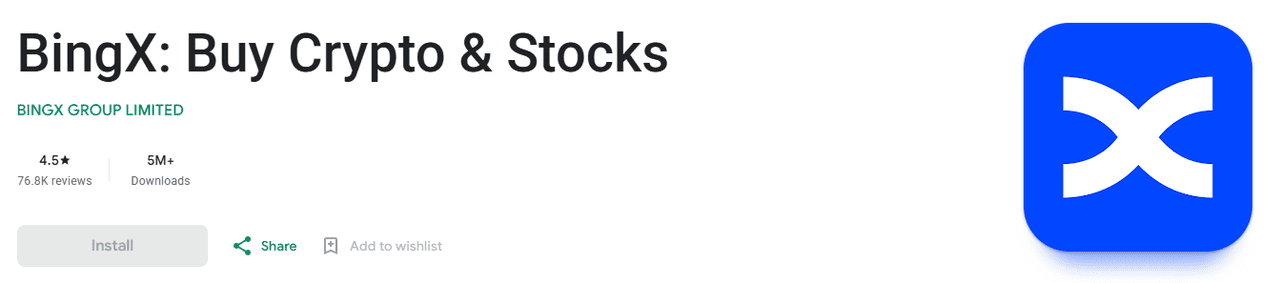
The BingX app is available on both Android and iOS. Its average app store rating stands at 4.5 stars, with more than 18,000 verified reviews on TradingView. Registration takes less than two minutes and can be completed directly on mobile using either email or phone number verification.
Copy Trading Directly Through the App
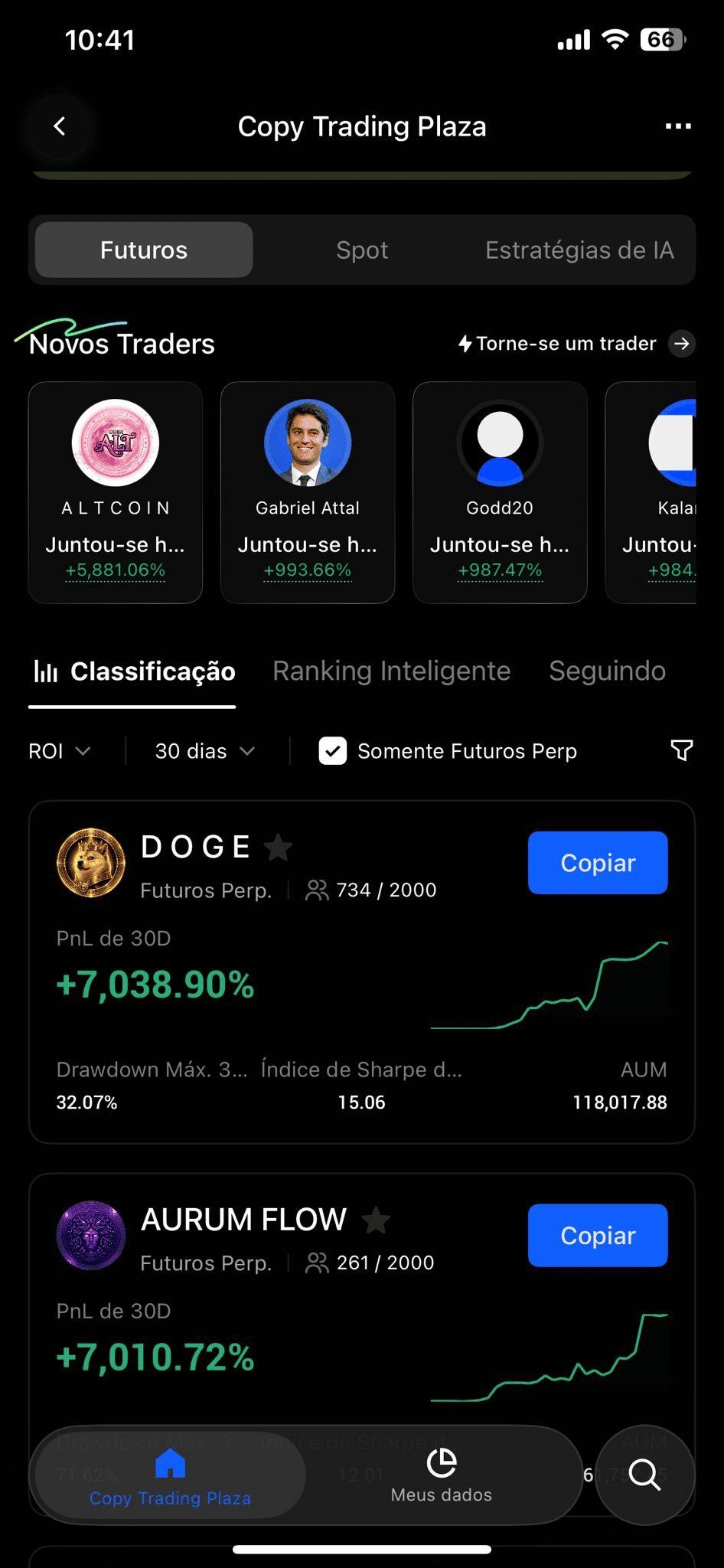
BingX copy trading is one of the most comprehensive solutions available for Brazilian users. With a single click, users can automatically replicate the strategies of professional traders selected through a transparent performance ranking system. Traders can choose between futures copy trading and spot grid copy trading, with access to historical profitability data, risk metrics, and maximum drawdown statistics.
For beginners without the time to study technical analysis, this feature offers a practical entry point into the market. Users simply define the maximum allocation amount, and the system handles execution automatically. Demo accounts are also available for practice without risking real capital.
Spot Trading, Futures, and Yield Products
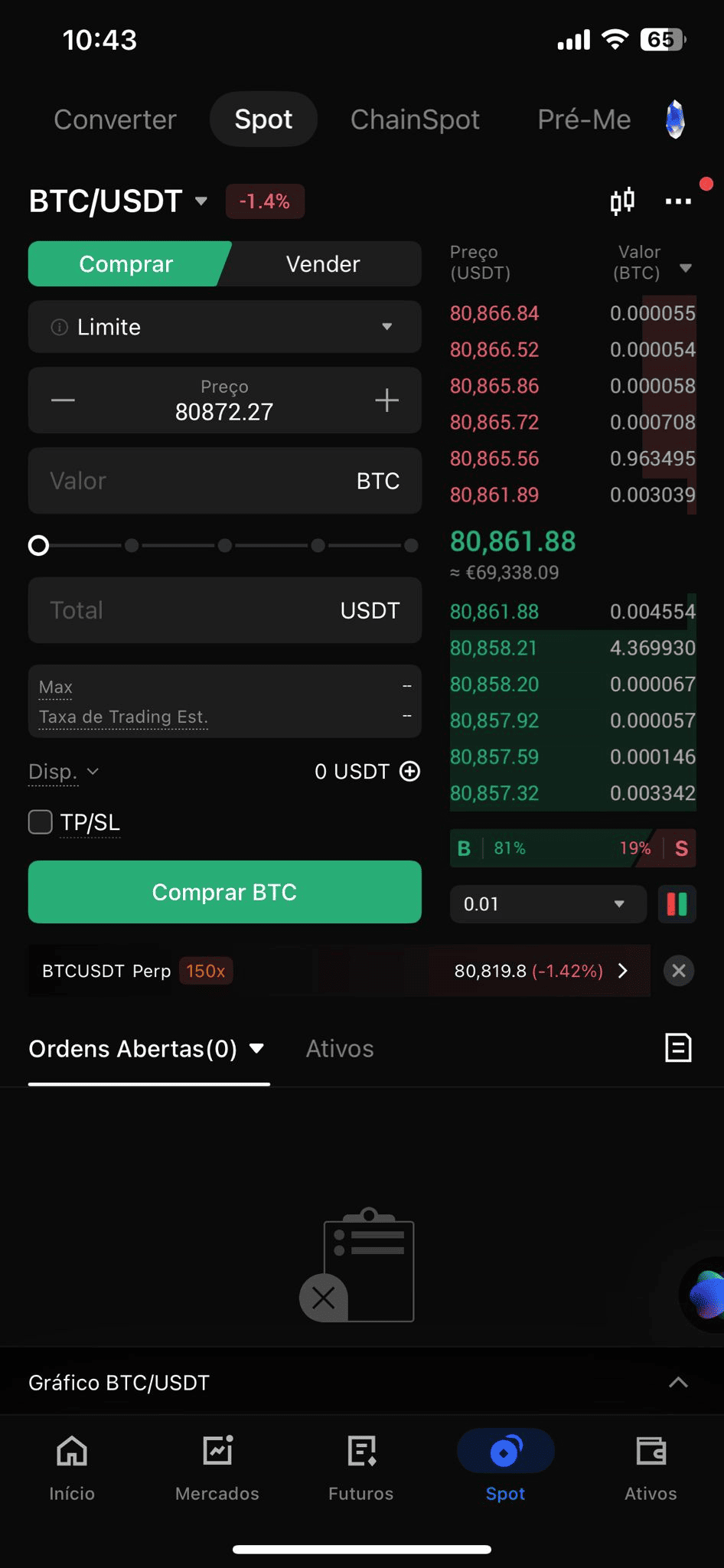
In the spot market, BingX lists more than 820 cryptocurrencies with strong liquidity and a 0.1% maker and taker fee structure. For leveraged trading, the platform offers perpetual futures with leverage of up to 150x on pairs such as BTC/USDT and ETH/USDT. Futures trading also includes demo mode for strategy testing without financial risk.
On the passive income side, BingX offers a staking program with flexible lock-up periods and competitive APY options. The platform also provides automated trading bots that execute buy and sell orders automatically within predefined price ranges, which can be especially useful during sideways market conditions. In addition, BingX AI delivers real-time market insights directly through the app.
PIX, Security, and Customer Support
PIX deposits and withdrawals are available for Brazilian users, enabling seamless BRL on-ramp and off-ramp transactions. Customer support operates 24/7 through live chat on both the website and mobile app, with full Portuguese-language assistance.
From a security standpoint, BingX utilizes cold wallet storage for the majority of user assets, mandatory two-factor authentication (2FA), and a dedicated protection fund. The exchange also provides BingX Verify, a tool that allows users to confirm whether a contact or domain is officially associated with the platform, reducing phishing risks.
Binance
Binance’s strongest advantage is liquidity. On major trading pairs such as BTC/BRL and ETH/USDT, the order books are extremely deep, resulting in lower slippage during execution. The platform also offers futures trading, staking, launchpad access, and a vast ecosystem of crypto products. The downside is that its interface can feel overwhelming for beginners due to the large number of features displayed on the home screen.
Mercado Bitcoin
Operates under local regulation and accepts deposits via PIX and TED. Fees range from 0.3% to 0.7% depending on trading volume, which is higher than most international platforms.
For users who prioritize legal certainty and do not require leverage or copy trading, it is a viable option, especially as it aligns with the concept of a Central Bank-regulated VASP.
OKX
OKX’s key differentiator is its integrated Web3 wallet, which allows users to access DeFi protocols directly from the app without leaving the platform. You can also explore the leading DEXs in the market before deciding which ecosystem best fits your profile.
Coinext: For Beginner Investors Seeking Simplicity
Coinext is a Brazilian exchange focused on simplicity and financial education. It supports PIX, provides customer service in Portuguese, and lists more than 150 crypto assets. Its 0.25% fee is competitive for a local platform, but still higher than major international exchanges.
It is not the most efficient choice for active traders, but it serves well as an entry-level gateway.
How to Calculate the Real Cost of Trading on Each Exchange
Trading fees may seem small, but they add up quickly. Here is a practical example:
Scenario: you buy R$5,000 worth of Bitcoin and sell it one week later for R$5,300, generating R$300 in profit.
- BingX fee (0.1%): R$5.00 on the buy order + R$5.30 on the sell order = R$10.30 in total costs. Net profit: R$289.70.
- Mercado Bitcoin fee (0.7%): R$35.00 on the buy order + R$37.10 on the sell order = R$72.10 in total costs. Net profit: R$227.90.
The R$61.80 difference in a single trade already shows why fees matter. For frequent traders, this cost multiplies throughout the month.
|
Exchange |
Trading Cost (R$5k + R$5.3k) |
Net Profit |
|
BingX |
R$10.30 |
R$289.70 |
|
Binance |
R$10.30 |
R$289.70 |
|
OKX |
R$8.24 |
R$291.76 |
|
Coinext |
R$25.75 |
R$274.25 |
|
Mercado Bitcoin |
R$72.10 |
R$227.90 |
Regulation in Brazil: What Changed in 2026 and Why It Protects You
In November 2025, the Central Bank published BCB Resolutions 519, 520, and 521, which came into force on February 2, 2026. These rules created a mandatory authorization framework for all exchanges operating in Brazil, known as Virtual Asset Service Providers (VASPs).
In practice, what changes for users is this: exchanges are required to keep customer assets in separate accounts from the company’s own funds. This is known as asset segregation and ensures that, in the event of platform bankruptcy, your funds are not mixed with the company’s assets. The lack of this protection was exactly what contributed to the collapse of FTX in 2022, when customers around the world lost billions of dollars.
In addition, exchanges must maintain minimum capital ranging from R$10.8 million to R$37.2 million to operate, depending on their activities. This filters out shell operators and strengthens the overall market.
How to Create a BingX Account and Start Trading Through the App
The process is nearly the same across all major exchanges. Here is the step-by-step guide:
1. Download the app of your chosen exchange from the Apple App Store or Google Play.
2. Click “Sign Up” and enter your email address or phone number.
3. Confirm using the code sent via SMS or email.
4. Go to account settings and complete KYC: upload an identity document (RG or CNH) and a selfie.
5. Enable two-factor authentication (2FA) through an authenticator app or SMS.
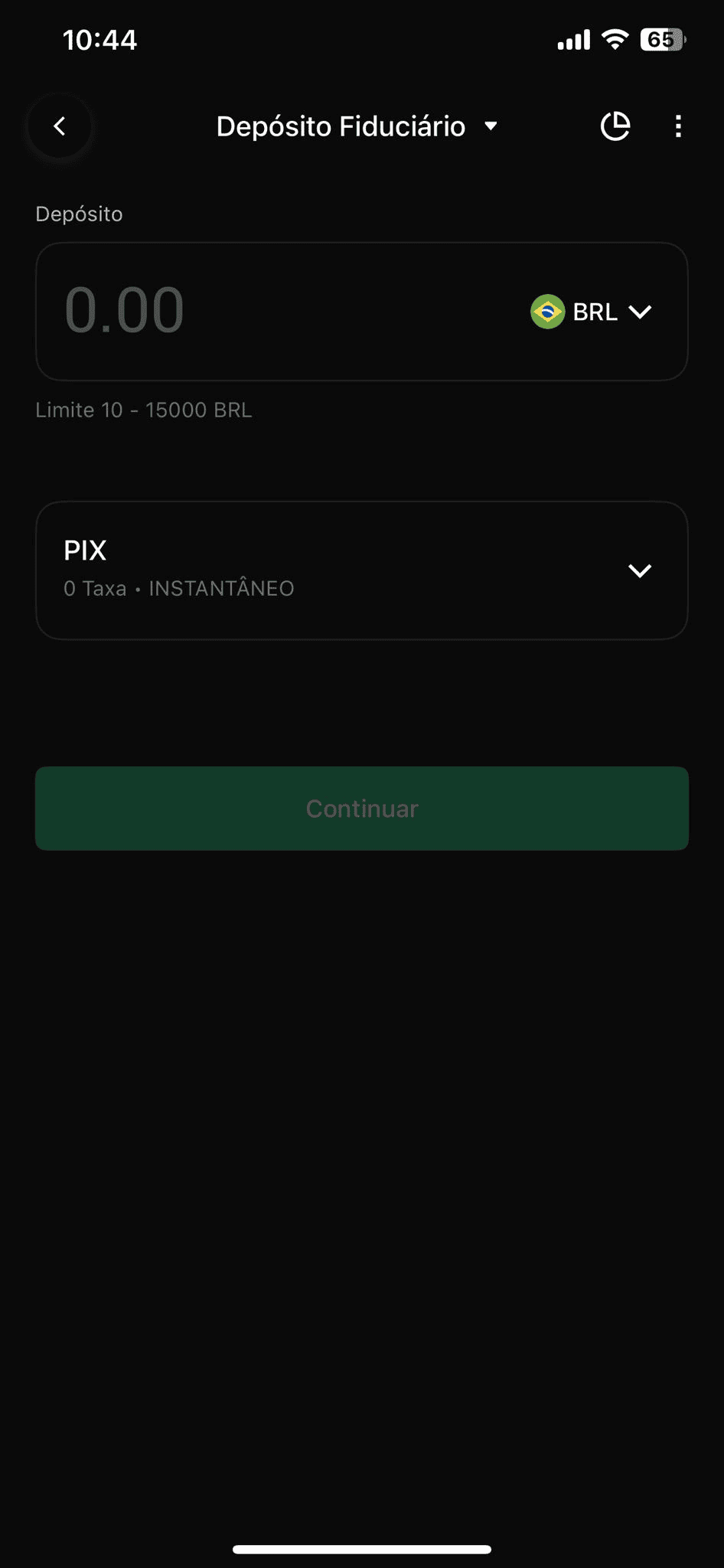
6. Make a PIX deposit through the “Wallet” or “Deposit” section. Check the BingX PIX deposit tutorial if you need guidance.
7. You are ready: you can now access the spot market to buy your first cryptocurrency.
KYC is usually approved within minutes when documents are legible and high quality. If you have questions, live chat support is available in Portuguese 24/7.
Frequently Asked Questions About Crypto Exchanges in Brazil
1. Which exchange is the safest to use in Brazil in 2026?
Exchanges that are regulated or in the authorization process with the Central Bank provide greater legal certainty. Platforms such as BingX, Binance, and Mercado Bitcoin have solid operating track records, protection funds, and cold storage for customer assets. Always check whether an exchange applies asset segregation before depositing large amounts.
2. Can I buy cryptocurrencies with PIX directly through the app?
Yes. The process is fast: you generate a QR Code or copy the PIX key in the app’s deposit section, pay through your bank, and the balance appears within seconds. PIX withdrawals are also available on most platforms.
3. Is there tax to pay when selling crypto in Brazil?
Yes. Monthly gains above R$35,000 from cryptocurrency sales are subject to Income Tax, with rates ranging from 15% to 22.5% depending on the profit. Transactions below this threshold are exempt. Brazil’s Federal Revenue Service requires all balances and transactions to be reported in the annual income tax return, regardless of the amount.
4. What is copy trading and how does it work in exchange apps?
Copy trading is a feature that allows users to automatically replicate the trades of selected professional traders. You choose a trader from the performance ranking, define the maximum amount to allocate, and the system mirrors each trade proportionally to your capital. On BingX, users can choose between spot and futures copy trading, with historical profitability and drawdown data.
5. Can I use more than one exchange at the same time?
Yes, and it is even recommended for risk diversification. Many traders use one main exchange for frequent trading and another as a backup for long-term custody. The key is to avoid keeping your entire portfolio on a single centralized platform. For larger long-term holdings, considering a hardware wallet also makes sense.
6. How can I know whether an exchange is regulated in Brazil?
The Central Bank will publish the list of authorized exchanges as they comply with BCB Resolutions 519–521. The compliance deadline runs until November 2026. In the meantime, check whether the exchange has a Brazilian CNPJ or registered local entity, a clear asset segregation policy, and a public Proof of Reserves report.
7. Which exchange app is best for beginners in Brazil?
For beginners, BingX stands out for its combination of an accessible interface, demo mode for risk-free practice, and copy trading that does not require advanced technical knowledge. The key is to start with small amounts until you understand how the platform works.
8. Are zero-fee exchanges real?
Some exchanges offer zero fees on specific trading pairs or for high trading volumes under VIP programs. In practice, platforms may still monetize through the spread, which is the difference between the buy and sell price, or through withdrawal fees. Use the BingX direct conversion tool to compare the real cost across different options before trading. Always add up all fees before deciding which platform is cheaper for your usage profile.
Summary: Key Points for Choosing Your Exchange
- Brazil has more than 25 million people with exposure to digital assets, and the market has been regulated by the Central Bank since February 2026
- The best exchanges for Brazilian users combine native PIX support, spot fees of 0.1% or lower, highly rated mobile apps, and regulatory compliance
- BingX stands out for accessible copy trading, demo mode, more than 820 crypto assets, and 24/7 Portuguese-language support
- The difference between paying 0.1% and 0.7% in fees can represent dozens of reais per trade: calculate the real cost before choosing where to trade
- Always enable 2FA on your account, avoid keeping your entire portfolio on a single exchange, and regularly check whether the platform is in the Central Bank authorization process
- Copy trading, staking, grid bots, and futures are available in the apps of leading exchanges and can be accessed directly from mobile. Apply proper risk management when using any of these products
