


As of early April 2026, XRP and Bitcoin display clear differences in wealth distribution. XRP exhibits higher concentration among its top addresses, driven primarily by its fully pre-mined supply and Ripple Labs substantial escrow holdings. Bitcoin, issued gradually through decentralized mining, supports a broader long-term distribution despite notable institutional accumulation.
Key Takeaways
- Bitcoin operates with a hard-capped supply of 21 million coins. As of March 2026, its circulating supply reached approximately 20 million BTC, representing more than 95% of the total maximum, with the remaining less than 1 million coins expected to be mined over the next approximately 114 years.
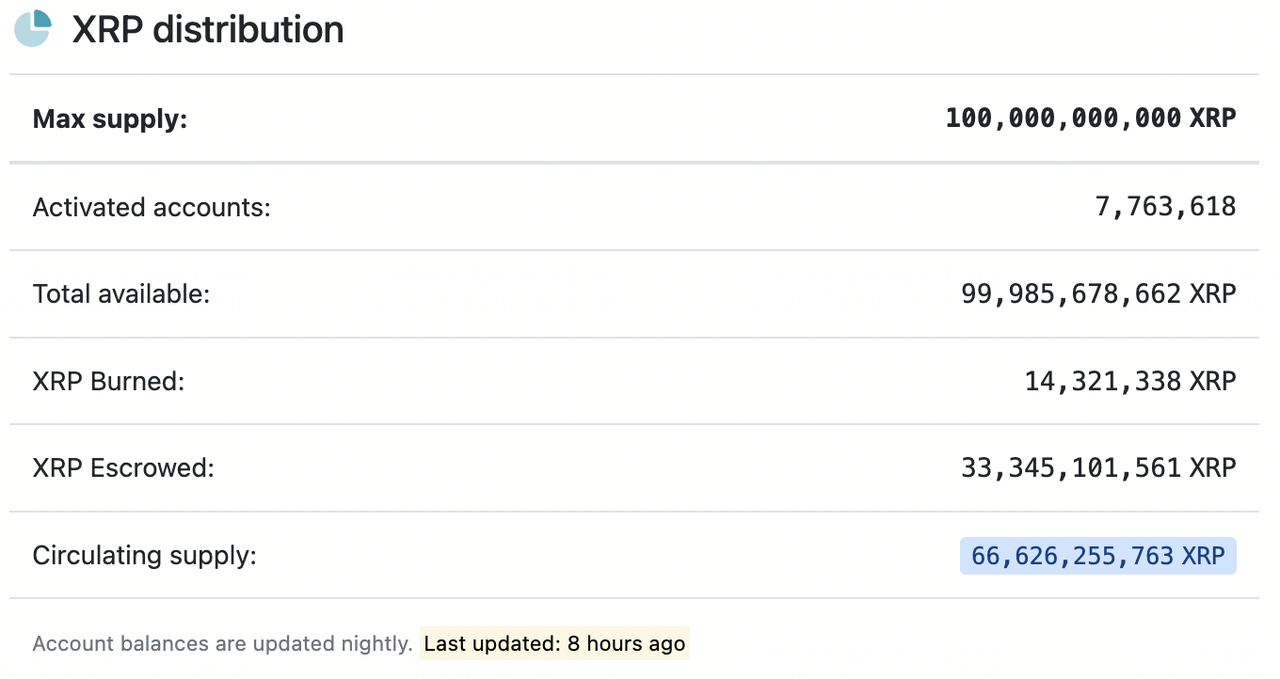
- XRP maintains a fixed total supply of 100 billion tokens, all created at launch. Its circulating supply stands at approximately 61 to 66.6 billion XRP as of early April 2026, with roughly 33.3 to 34 billion XRP held in Ripple-managed escrow accounts.
- Wealth in XRP remains more concentrated at the top tier of addresses compared with Bitcoin. A significant portion of XRP top holdings consists of exchange custody wallets and Ripple escrow, representing pooled or programmatic control rather than single speculative entities. Bitcoin positions itself as the more decentralized store of value, while XRP functions mainly as a payment utility token with a distinct structural profile.
- Institutional adoption continues for both assets. Bitcoin attracts larger corporate treasuries and spot exchange-traded funds, reinforcing its role as digital gold.
What Is Bitcoin (BTC)?
Bitcoin is the first cryptocurrency, introduced in 2009 by the pseudonymous Satoshi Nakamoto. It runs on a decentralized peer-to-peer network secured through proof-of-work mining. Network participants validate transactions and secure the blockchain, receiving newly minted bitcoin as block rewards. The protocol enforces a maximum supply of 21 million BTC, with new issuance halving roughly every four years. This predictable, slowing release schedule underpins Bitcoin value proposition as a scarce, inflation-resistant asset.
Read more: Who Owns the Most Bitcoin in 2026? Top 10 BTC Rich List Revealed
BTC Wealth Distribution and Concentration
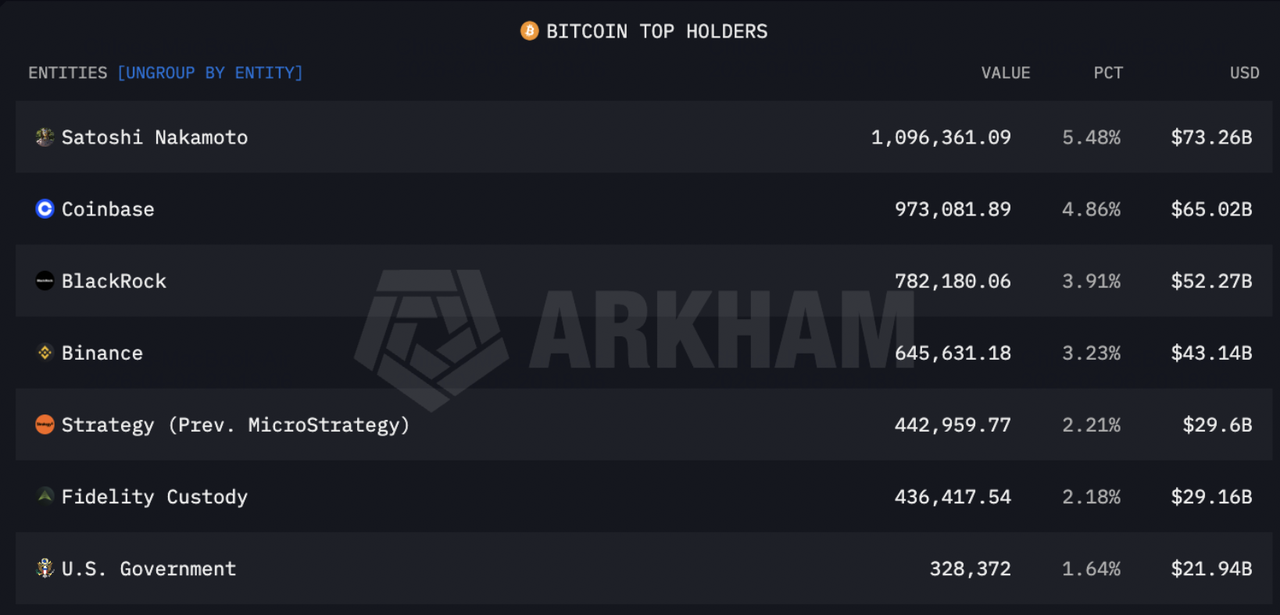
Source: BTC Top Holders 2026 Arkham
Bitcoin wealth distribution appears more decentralized than that of many pre-mined cryptocurrencies, although large holders exist. Top addresses include dormant early-mined coins, exchanges, exchange-traded funds, and corporate treasuries.
Addresses holding 10,000 BTC or more collectively account for roughly 14% of total supply when grouped. The top 1,000 addresses control over 15% in broader analyses. Exchanges hold approximately 10 to 12% of Bitcoin on behalf of users. When viewed as raw individual addresses without entity consolidation, concentration remains lower than in XRP.
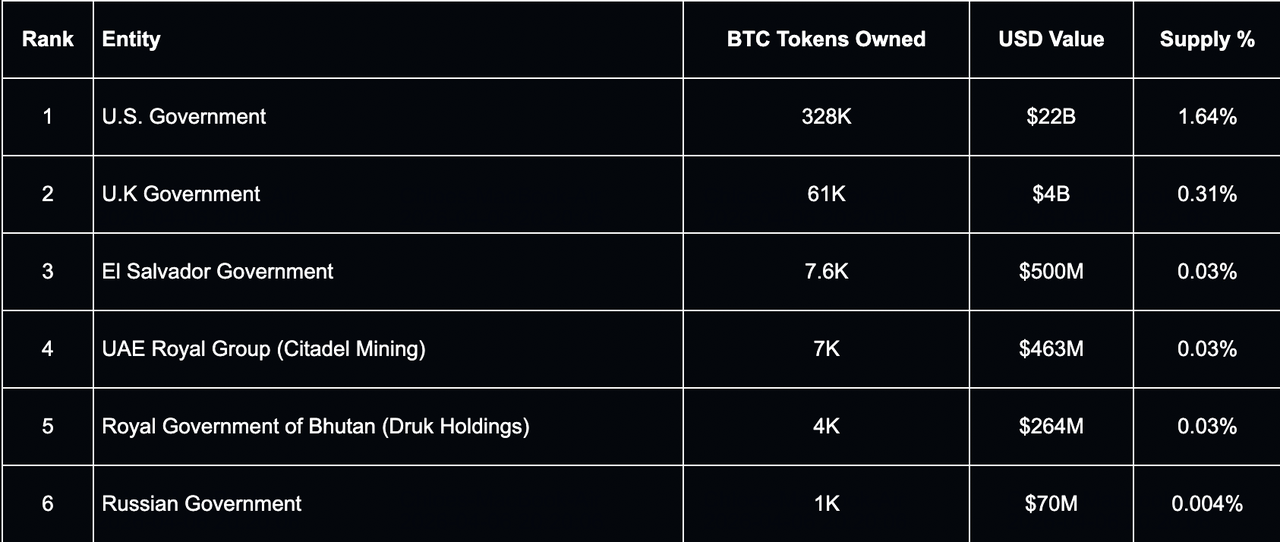
Source: Arkham
Notable institutional positions include BlackRock iShares Bitcoin Trust with hundreds of thousands of BTC, public companies such as Strategy (formerly MicroStrategy) maintaining significant corporate treasuries exceeding 700,000 BTC in some reports, and governments holding seized assets. Satoshi Nakamoto associated addresses are estimated to hold about 1.1 million BTC, or roughly 5.5% of supply, though these remain largely inactive. The gradual mining-based issuance over more than 17 years has encouraged wider participation, contributing to a more dispersed ownership base compared with assets created entirely at inception.
Read more: What Are the Top 10 Bitcoin Treasury Companies of 2026: Institutional BTC HODLers
What Is Ripple (XRP)?
Ripple Labs created XRP as the native digital asset of the XRP Ledger, a blockchain designed for fast and low-cost cross-border payments and settlements. Unlike Bitcoin, the entire 100 billion XRP supply was pre-mined at launch. The ledger employs a consensus mechanism rather than energy-intensive proof-of-work, achieving transaction finality in seconds. XRP serves primarily as a bridge currency to facilitate liquidity between different fiat currencies for financial institutions and payment providers.
XRP Wealth Distribution and Concentration
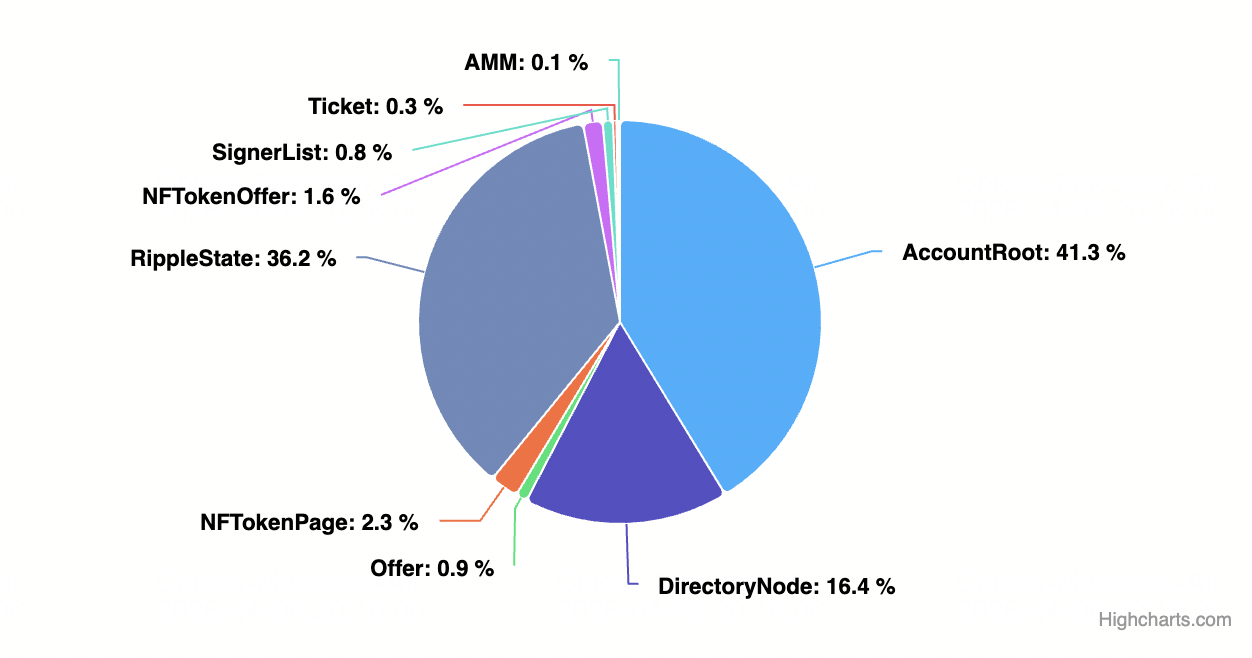
Source: XRPScan
XRP wealth distribution shows higher top-end concentration due to its pre-mined structure and Ripple ongoing reserves. As of early April 2026, Ripple Labs controls approximately 33.3 to 34 billion XRP in programmatic escrow, representing about one-third of the total supply. Monthly unlocks of 1 billion XRP occur, with the majority typically re-locked after partial usage, resulting in a net circulating supply increase of around 200 to 300 million XRP per month.
The top 10 XRP addresses hold approximately 18.56 to 20% of the circulating supply, equivalent to roughly 11 to 12 billion XRP. The top 50 addresses control about 43 to 44%. Many of these leading wallets belong to major exchanges such as Bithumb (approximately 1.79 billion XRP), Binance (approximately 1.68 billion XRP), Uphold, and UPbit, which custody assets on behalf of millions of retail and institutional users. Ripple escrow and operational wallets also feature prominently.
For individual holders, the threshold to reach the top 10% of all XRP addresses is roughly 2,200 to 2,350 XRP. Entering the top 1% requires approximately 46,000 to 46,500 XRP, a level met by around 76,000 to 77,000 wallets. The total number of XRP addresses has grown steadily, exceeding 7.5 million, with the largest increases occurring among smaller-balance accounts. While raw address concentration appears elevated, a substantial share reflects custodial holdings and escrow rather than control by a handful of private speculators.
read more: Top Tools to Track XRP Whale Activity: 2026 Guide to XRP Rich List and Market Signals
Wealth Distribution Comparison: XRP vs. Bitcoin (Early April 2026)
|
Metric |
Bitcoin (BTC) |
XRP |
|
Total Supply |
21 million (hard cap) |
100 billion (pre-mined) |
|
Circulating Supply |
~20.01 million (~95.3%) |
~66.6 billion |
|
Top 10 Addresses (% of circulating) |
~Lower individual dominance (raw addresses) |
18.56 – 20% |
|
Top 50 Addresses (% of circulating) |
Not directly comparable (broader) |
43 – 44% |
|
Major Entity Concentration |
Satoshi ~5.5%, Coinbase ~5%, BlackRock ~4% |
Ripple escrow ~33%, Exchanges dominate top wallets |
|
Primary Supply Mechanism |
Gradual mining (decentralized) |
Pre-mined + monthly escrow releases |
|
Individual Top 1% Threshold |
Significantly higher balances required |
~46,323 XRP |
|
Individual Top 10% Threshold |
Much higher balances required |
~2,200 – 2,350 XRP |
Source: XRPSCAN, BitInfoCharts, Arkham
This table illustrates the structural differences in supply issuance and holder concentration between the two assets.
Is XRP or Bitcoin Wealth More Centralized?
A side-by-side comparison reveals structural contrasts. Bitcoin top-tier concentration sits lower, with large address groupings accounting for roughly 14% in the highest brackets, versus XRP top 10 addresses at 18.56 to 20% and top 50 at 43 to 44% of circulating supply.
Bitcoin's decentralized mining process has distributed new coins across a global network of participants over time, fostering broader ownership even as institutions accumulate. XRP's pre-mined model and Ripple's significant escrow position create inherent concentration, tempered by predictable release schedules and the custodial nature of many top exchange wallets. Bitcoin benefits from deeper institutional integration, including spot exchange-traded funds holding tens of billions in assets and corporations treating it as a treasury reserve. XRP adoption ties more closely to its utility in cross-border payments.
In summary, Bitcoin exhibits lower centralization in wealth distribution. Its fixed supply, slow issuance, and proof-of-work consensus support a more dispersed holder base over the long term. XRP, optimized for payment efficiency, carries a more centralized wealth profile stemming from its creation mechanics.
Read more: Top Tools to Track XRP Whale Activity: 2026 Guide to XRP Rich List and Market Signals
Top Holder Concentration and Supply Control: XRP vs. Bitcoin
Top holder concentration highlights the core difference between the two assets. In XRP, the top 10 addresses control 18.56 to 20% of circulating supply, while the top 50 reaches 43 to 44%. In Bitcoin, addresses in the 10,000 BTC or higher category collectively represent around 14%, with the very top raw addresses showing even lower individual dominance.
Supply control further differentiates them. Bitcoin new supply enters the market slowly through competitive mining, distributing coins to a wide range of participants. XRP total supply was fixed at launch, with Ripple maintaining significant influence through escrow that releases tokens predictably. This structure provides supply predictability but contributes to higher observed concentration at the top.
Read more: Who Owns the Most XRP in 2026? Top 10 XRP Rich List Revealed
Role of Exchanges and Institutional Wallets in Bitcoin, XRP Wealth Distribution
Exchanges and institutional wallets play a major role in shaping perceived concentration for both assets. In XRP, major platforms such as Bithumb, Binance, Uphold, and UPbit dominate many of the top 10 and top 50 addresses, holding billions of XRP each on behalf of their customers. These custodial wallets represent diversified retail and institutional user bases rather than single controlling entities.
Exchanges like Coinbase and Binance, along with Bitcoin ETF issuers such as BlackRock and Fidelity, hold large aggregated amounts of Bitcoin. Corporate treasuries, including Strategy, and government-held seized coins also feature prominently. These institutional and custodial holdings increase visible concentration on rich lists but reflect broad underlying ownership rather than centralized control by a few individuals. For both assets, distinguishing between custodial pools and true whale wallets is essential when assessing decentralization.
Read more: BingX vs. Binance 2026: Which Is Better for Spot and Futures Trading? Pros, Cons and Fees Compared
What Centralization Means for Investors
Higher wealth concentration can influence market dynamics in meaningful ways. In more centralized assets like XRP, large holders or coordinated releases from escrow have the potential to create sudden supply pressure or coordinated selling, increasing volatility. In Bitcoin, while large entities exist, the broader distribution and slower new supply reduce the impact of any single actor.
Market manipulation risks rise with concentration, as sizable wallets could theoretically move prices through large trades, especially in lower-liquidity conditions. Liquidity impact varies as well. XRP often experiences amplified price moves from the same dollar inflow or outflow due to its smaller market capitalization relative to Bitcoin. Bitcoin generally offers deeper liquidity and more resilient order books, partly due to its wider holder base and institutional infrastructure.
Investors should view centralization not as binary but as a spectrum. Bitcoin lower relative concentration aligns with its store-of-value narrative, potentially offering greater stability. XRP higher concentration ties to its utility focus, which may deliver faster transaction benefits but introduces different risk considerations around supply events and large-holder behavior.
How to Track Whale Distribution for XRP and BTC
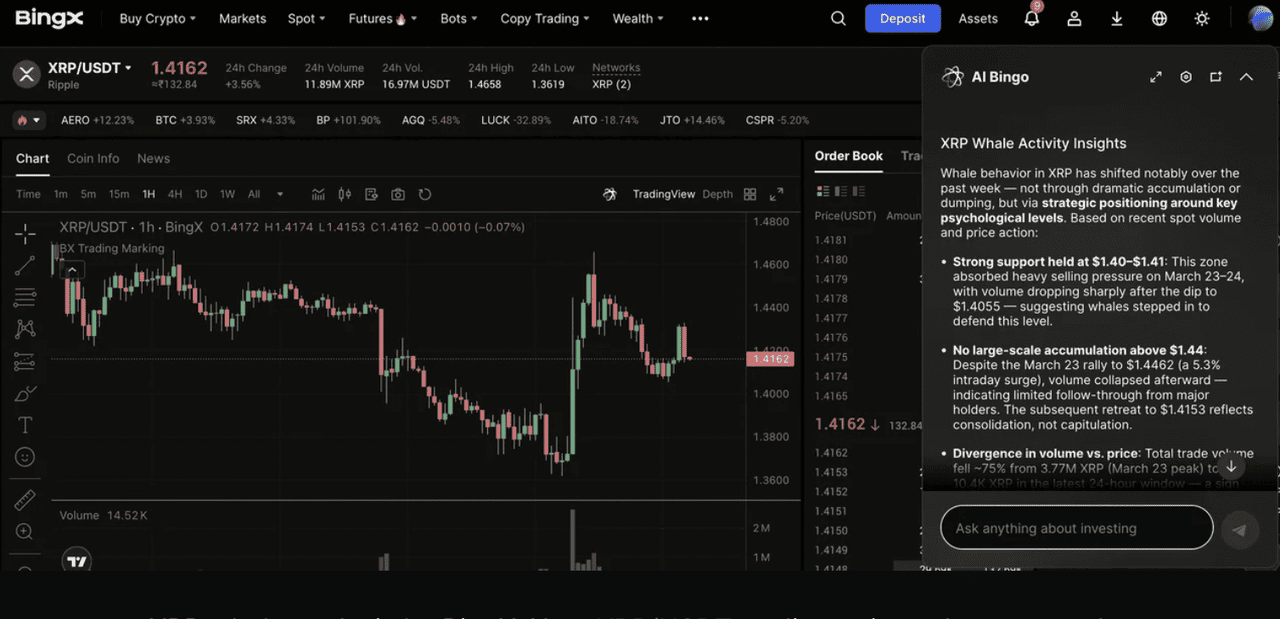
XRP whale analysis by BingX AI on XRP/USDT trading pair on the spot market
BingX stands out as one of the most practical and integrated platforms for tracking whale distribution in both Bitcoin and XRP in 2026. Its BingX AI suite, powered by AI Bingo and AI Master, processes real-time on-chain data directly from the Bitcoin blockchain and the XRP Ledger. At its core is a $300 million neural infrastructure that processes microsecond-level data directly from the XRP Ledger. Unlike standard tools, BingX utilizes AI Bingo and AI Master to filter through the millions of daily XRPL transactions, focusing exclusively on High-Conviction moves that exceed $1 million.
Traders on BingX benefit from predictive AI alerts that analyze historical wallet behavior, cross-reference liquidity conditions, and deliver actionable insights with near-zero latency. These alerts appear directly in the trading dashboard, allowing users to monitor large transfers, exchange inflows or outflows, and potential price catalysts without switching between multiple tools. BingX also integrates flash news updates and sentiment analysis, giving context to whale activity so users can respond quickly through spot, futures, or copy trading features.
For deeper monitoring, BingX users can combine the platform’s native tools with complementary resources. On-chain explorers such as Blockchain.com or Mempool.space work well for Bitcoin, while XRPSCAN and Bithomp provide detailed XRP address and escrow visibility. Third-party alert services like Whale Alert can supplement BingX for raw transfer notifications. The advantage of starting with BingX lies in its seamless workflow: whale signals are delivered inside the same environment where traders can immediately execute or copy strategies based on the observed activity. Regular use of BingX AI helps investors separate meaningful whale movements from noise, offering a clear edge in understanding supply dynamics for both Bitcoin and XRP.
Read more: What Is XRP Ledger Tokenization and Why Is It Growing in 2026?
Conclusion
Wealth distribution data highlights Bitcoin advantage in relative decentralization, consistent with its established role as a scarce and widely adopted digital asset. XRP delivers strong utility in global payments but reflects greater top-end concentration due to its pre-mined origins and Ripple escrow management.
Investors should weigh these supply dynamics, use cases, and risk profiles when comparing the two assets. Bitcoin generally offers a more stable store-of-value proposition with broader distribution characteristics, while XRP functions as a higher-volatility utility token within the Ripple ecosystem. Both continue to draw institutional interest, influencing their paths in the maturing cryptocurrency market.